


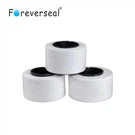
As a supplier of LD EPTFE (Low Density Expanded Polytetrafluoroethylene) Film, I understand the importance of maintaining stringent quality control standards. LD EPTFE film is a remarkable material known for its high chemical resistance, excellent electrical insulation properties, and low friction coefficient. It is widely used in various industries such as electronics, aerospace, medical, and filtration. In this blog, I will delve into the key standards for the quality control of LD EPTFE film.
Physical Properties
Thickness Uniformity
One of the primary physical properties to consider is the thickness uniformity of the LD EPTFE film. A consistent thickness is crucial as it directly impacts the film's performance in different applications. For example, in the production of High Temperature SHIELD PTFE Insulated Wire And Cable, a non - uniform film thickness can lead to uneven insulation, which may result in electrical breakdown or other performance issues.
To ensure thickness uniformity, we use advanced measuring equipment such as micrometers and laser thickness gauges. Samples are taken at regular intervals across the width and length of the film during the production process. The thickness variation should be within a very narrow tolerance range, typically ± 5% or less, depending on the specific requirements of the application.
Density
The density of LD EPTFE film is another important physical property. A proper density is related to the film's porosity, strength, and other performance characteristics. Lower density films generally have higher porosity, which can be beneficial for applications such as filtration. However, if the density is too low, the film may lack the necessary mechanical strength.
We measure the density of the film using the Archimedes' principle. By comparing the measured density with the specified density range for the product, we can ensure that the film meets the required standards. The density of our LD EPTFE film is carefully controlled to provide the right balance between porosity and strength for different applications.
Tensile Strength and Elongation
Tensile strength and elongation are critical mechanical properties of LD EPTFE film. Tensile strength refers to the maximum stress that the film can withstand before breaking, while elongation measures the percentage increase in length of the film before it breaks under tensile force.
In applications where the film is subjected to mechanical stress, such as in cable wrapping tapes like PTFE Cable Wrapping Tape, high tensile strength and appropriate elongation are essential. We conduct tensile tests using universal testing machines. The test specimens are cut from the film according to standard dimensions, and the tests are carried out at a controlled speed. The results are compared with pre - determined standards to ensure the film's quality.
Chemical Properties
Chemical Resistance
One of the most outstanding features of LD EPTFE film is its excellent chemical resistance. It can resist a wide range of chemicals, including acids, bases, and organic solvents. This property makes it suitable for use in harsh chemical environments, such as in chemical processing plants and laboratories.


To test the chemical resistance of our LD EPTFE film, we immerse samples of the film in various chemicals for a specific period. After the immersion, we examine the film for any signs of degradation, such as changes in appearance, weight, or mechanical properties. The film should show minimal or no signs of damage when exposed to the specified chemicals.
Purity
The purity of the LD EPTFE film is also a crucial chemical property. Impurities in the film can affect its performance, especially in applications where high - purity materials are required, such as in the medical and semiconductor industries.
We use advanced analytical techniques such as spectroscopy and chromatography to analyze the purity of the film. The film should have a high level of purity, with the presence of impurities kept below a certain threshold. This ensures that the film does not introduce any contaminants into the systems where it is used.
Surface Properties
Surface Smoothness
The surface smoothness of the LD EPTFE film is important for many applications. A smooth surface can reduce friction, improve the adhesion of coatings or other materials, and enhance the overall appearance of the product.
We use surface profilometers to measure the surface roughness of the film. The surface roughness should be within a specified range to meet the requirements of different applications. For example, in applications where the film is in contact with other moving parts, a very smooth surface is necessary to minimize friction and wear.
Wettability
Wettability refers to the ability of a liquid to spread over the surface of the film. In some applications, such as in the printing or coating processes, a certain level of wettability is required to ensure good adhesion of the ink or coating.
We measure the wettability of the film by measuring the contact angle between a liquid droplet and the film surface. By adjusting the surface treatment process, we can control the wettability of the LD EPTFE film to meet the specific needs of different applications.
Electrical Properties
Dielectric Constant and Dissipation Factor
In electrical applications, the dielectric constant and dissipation factor of the LD EPTFE film are important electrical properties. The dielectric constant is a measure of the ability of the material to store electrical energy in an electric field, while the dissipation factor represents the energy loss in the material when an alternating electric field is applied.
For applications such as EPTFE Film used in high - frequency circuits, a low and stable dielectric constant and dissipation factor are required to ensure good electrical performance. We use impedance analyzers to measure these electrical properties at different frequencies. The measured values are compared with the specified standards to ensure the quality of the film for electrical applications.
Volume Resistivity and Surface Resistivity
Volume resistivity and surface resistivity are also important electrical properties of LD EPTFE film. Volume resistivity measures the resistance of the material to the flow of electric current through its volume, while surface resistivity measures the resistance of the material to the flow of electric current along its surface.
In applications where electrical insulation is required, high volume and surface resistivity are essential. We use resistivity meters to measure these properties. The measured resistivity values should be within the specified range to ensure the film's effectiveness as an electrical insulator.
Quality Control in the Production Process
Raw Material Inspection
The quality control of LD EPTFE film starts with the inspection of raw materials. We carefully select the raw materials from reliable suppliers and conduct strict inspections before using them in the production process. This includes checking the purity, particle size, and other properties of the raw materials to ensure that they meet our quality requirements.
In - process Monitoring
During the production process, we implement in - process monitoring to ensure that the film is being produced in accordance with the quality standards. This includes continuous monitoring of process parameters such as temperature, pressure, and speed. Any deviations from the set parameters are immediately detected and corrected to prevent the production of sub - standard products.
Final Product Testing
After the production is completed, we conduct a series of final product tests to ensure that the LD EPTFE film meets all the required quality standards. This includes physical, chemical, surface, and electrical property tests as described above. Only the products that pass all the tests are released for shipment.
Conclusion
Maintaining high - quality standards for LD EPTFE film is essential to meet the diverse needs of different industries. By controlling the physical, chemical, surface, and electrical properties of the film, and implementing strict quality control measures in the production process, we can ensure that our LD EPTFE film provides reliable performance in various applications.
If you are in the market for high - quality LD EPTFE film, we invite you to contact us for procurement discussions. Our team of experts is ready to provide you with detailed product information and technical support to help you find the best solution for your specific needs.
References
- ASTM International standards related to PTFE and EPTFE materials.
- Industry - specific technical literature on the applications of LD EPTFE film.