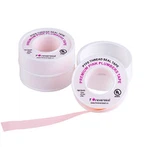
What Is Plumber's (Teflon) Tape?
Plumber's tape or Teflon tape is a polymer made of polytetrafluoroethylene (PTFE). Teflon is the trademark name Chemours (formerly Dupont) has for the polymer. You can't find a product called "Teflon tape" on shelves; instead, it's labeled "thread seal" or "thread-sealing" tape. Confusing matters, "plumber's tape" is a name used for metal or plastic strapping used to support pipe. Also, be aware that plumber's tape is a very different product than plumber's putty.
Plumber's tape is easy and safe in many applications, but there's a right and wrong way to apply it. Also, note it is not recommended for PVC, some copper fittings, PEX pipes, or the female end of connections. Plumbing and gas connections that use stainless steel, brass, and iron are most commonly used with plumber's tape. As always, ensure you defer to the manufacturer's packaging instructions concerning using plumber's tape on specific pipe fittings.
Before You Begin
Not all plumber's (Teflon) tape is the same. Before grabbing a roll, get the right kind for your needs. These tapes are color-coded according to their use. Here's the difference between them:
White or pink tape: Commonly used by plumbers and pipe fitters for water lines; white is the more common type; pink is sturdier and often used by pipe fitters
Yellow tape: Used for gas lines; meets gas company standards for propane, butane, and natural gas
Green tape: Used for oxygen lines; grease-free and non-combustible around oxygen
Gray tape: Used for stainless steel fittings; has a high-density rating, nearly double the thickness of other threading tapes; prevents seizing and galling
Blue tape: A professional tape used to seal high-pressure gas, air, and water lines
Safety Considerations
Overuse or misapplication of thread can be hazardous. Do not apply more than six wrappings around a threading. Excess application of tape can prevent the mating of the threads, causing shearing or bursting at the threads.
Overheating the threading or Teflon at high temperatures in industrial applications can produce perfluoroisobutene, a toxic and potentially fatal gas.
Instructions for Using Plumbers (Teflon) Tape
The trick to applying Teflon tape properly is wrapping it around the pipe correctly. When the pipe is turned into the fitting, the friction of the mating threads should work to tighten the tape around the pipe rather than work against it and unravel or ball up the tape.
Wrap the tape around the pipe in the same clockwise direction as how the pipe will turn into the fitting. This way, it won't unravel while making up the joint.
Clean the Pipe
Clean the male threads at the end of the pipe with a clean rag.
Line up the Pipe and Tape
Place the end of the plumber's tape on the second thread from the end of the pipe and hold it in place with a finger or thumb. The tape should lie flat (not bunched up) over the threads and extend perpendicularly to the length of the pipe.
Wrap the Tape
Begin wrapping the tape around the pipe in the same direction as the direction the pipe will be turned.
Plumber's tape wrapped around pipe end in opposite direction
Keep the Tape Tight
Maintain tension on the tape so it wraps snugly around the pipe. Work away from the end of the pipe, overlapping the tape as you go.
Wrap Four to Six Times
Complete four to six wraps around the pipe, finishing near the end of the threads (opposite the end of the pipe).
Break the Tape
Break the tape from the roll by gripping it between the thumb and forefinger and pulling sharply; it breaks easily. Smooth the loose end down over the threads. The pipe is now ready to go into the fitting.