Latest Products

Contact Us
- No.278, Qingxian Road, Linglong Street, Linan, Hangzhou, Zhejiang, China.
- fiona@foreverseal.com
- +8613396551886
Hangzhou Forever Plastics Co., Ltd located in Linan, Hangzhou, China. It is a professional manufacturer and exporter of high quality ptfe tape and ptfe film, which was established in 2009. We are not the largest one, but the best partner you need.
Since 2012, with significant investment in both Research&Development for all production line, we have already introduced automatic machines to improve the work efficiency and product quality. From mixing, calendering, stretching, slitting, rewinding and packing, our well-equipped facilities and professional quality control through all stages of production enable us to guarantee total customers’satisfaction.
Why Choose Us
Factory
Our company has 4 buildings and covering area of 6600m3, now we have over 60 workers, a team of qualified engineers and professional sales group. We have clean office building and good working environment.
Global Shipping
Our main market is Europe, North America, South America, South-East Asia, North Africa and Mid-East. We have large production capacity and export more than 15x20ft containers per month. We can produce goods quickly and ship goods on time.
Our Certificate
Our PTFE TAPE have obtained ISO9001, UL, DVGW, WRAS, ACS certificate. Stable and good quality lead us to keep long and standing business relations with old clients and get more new clients from middle & high quality markets.
Professional Team
We believe our good quality products and professional customer service can maintain long term stable business with our clients. If you are interested in our goods, please contact us freely. Welcome to visit our factory!
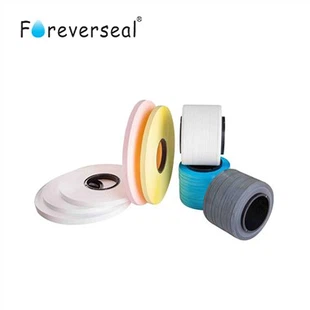 PTFE Wrapping Film
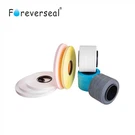
PTFE(Polytetrafluorethylene). Expanded, natural or colors. Thickness: 0.051mm - 0.254mm. Width: 4mm -200mm. Standard density: 1.60g/cm3
Add to Inquiry Water Proof Breathable Vent PTFE Film
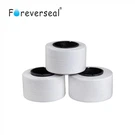
PTFE(Polytetrafluorethylene). Expanded, natural. Thickness: 0.203mm. Width: <200mm.
Add to Inquiry Polytetrafluoroethylene (PTFE) Waterproof Ventilation Film
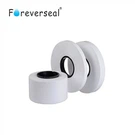
PTFE(Polytetrafluorethylene). Expanded, natural. Thickness: 0.203mm. Width: <200mm.
Add to Inquiry Waterproof Breathable PTFE FILM For Electronics Product
PTFE(Polytetrafluorethylene). Expanded, natural. Thickness: 0.203mm. Width: <200mm.
Add to Inquiry PTFE Waterproof Breathable Tape
PTFE(Polytetrafluorethylene). Expanded, natural. Thickness: 0.203mm. Width: <200mm.
Add to Inquiry High Thermal And Chemical Resistance Ptfe Films
PTFE(Polytetrafluorethylene). Expanded, natural or colors. Thickness: 0.203mm . Width: 12mm. Standard density: 1.60g/cm3
Add to Inquiry PTFE Film For Insulation And Cabling
PTFE(Polytetrafluorethylene). Expanded, natural or colors. Thickness: 0.203mm . Width: 10mm. Standard density: 1.60g/cm3
Add to Inquiry Colored Unsinerted Ptfe Tape For Cable Jacket
PTFE(Polytetrafluorethylene). Expanded, natural or colors. Thickness: 0.203mm . Width: 8mm. Standard density: 1.60g/cm3
Add to Inquiry Paste-extruded PTFE Film
PTFE(Polytetrafluorethylene). Expanded, natural or colors. Thickness: 0.203mm . Width: 6mm. Standard density: 1.60g/cm3
Add to Inquiry High Tensile Strength Unsintered Extruded PTFE
PTFE(Polytetrafluorethylene). Expanded, natural or colors. Thickness: 0.152mm . Width: 12mm. Standard density: 1.60g/cm3
Add to Inquiry High Density Unsintered Extruded PTFE Film
PTFE(Polytetrafluorethylene). Expanded, natural or colors. Thickness: 0.152mm . Width: 10mm. Standard density: 1.60g/cm3
Add to Inquiry Cable Wrapped Ptfe Film
PTFE(Polytetrafluorethylene). Expanded, natural or colors. Thickness: 0.152mm . Width: 8mm. Standard density: 1.60g/cm3
Add to Inquiry
HD PTFE film provide superior electrical and chemical of the standard serious. It’s recommended for heating cables,aircraft and automotive cable in highly critical military,aerospace and high demand industrial.
High density PTFE wrapping film tape provide superior electrical and chemical of the standard serious. It’s recommended for heating cables, aircraft and automotive cable in highly critical military,aerospace and high demand industrial.
Superior Wear Resistance
The denser structure of HD PTFE film also provides better wear resistance, making it suitable for applications where there is friction or abrasion, such as in bearings or seals.
Better Surface Quality
HD PTFE film often has a smoother surface than standard PTFE film, which can enhance its performance in applications where surface finish is important, such as in medical devices or food processing equipment.
Enhanced Chemical Resistance
Although standard PTFE film has excellent chemical resistance, HD PTFE film can exhibit even greater resistance to a wider range of chemicals, making it suitable for use in harsh chemical processing environments.
Non-Stick Properties
HD PTFE film retains the non-stick properties characteristic of PTFE, which makes it suitable for uses where it comes into contact with other materials, preventing sticking and facilitating easy cleaning.
UV Resistance
HD PTFE film maintains the ability to resist UV radiation, which is beneficial for outdoor applications where the film is exposed to sunlight.
EPTFE membrane: Expanded polytetrafluoroethylene membrane, which forms a unique three-dimensional mesh structure through stretching and expansion, has high porosity and filtration efficiency, and is suitable for gas/liquid filtration and waterproof breathable materials.
PTFE clothing membrane: Thin and soft, used for outdoor clothing, protective clothing, etc. to provide windproof, waterproof and breathable functions.
PTFE architectural membrane: Such as G-type membrane, with high strength and good optical properties (light transmission, heat insulation), often used to make roof membrane structures of large stadiums and exhibition halls.
PTFE filter membrane: Used as an efficient separation membrane in the chemical and environmental protection fields, with extremely high tolerance to acids, alkalis and organic solvents.
Medical grade PTFE membrane: Non-toxic, good biocompatibility, used to manufacture medical device products such as artificial blood vessels and tissue repair materials.

Applications of HD PTFE Film
Given that the specific processing of HD PTFE film, including additive manufacturing, can have such a large impact on its properties, there is a large range of applications for this material. HD PTFE film has applications in a huge range of industrial sectors, including automotive, chemical, electronic, aerospace and medical.
HD PTFE film Sheet and Film
Given HD PTFE film has such a high melting point for a polymer, it is commonly used to produce sheets and films for further applications. Sheets and thin films of HD PTFE film are used mainly in the packaging sector. In the packaging of chemical equipment, pharmaceuticals and cosmetic products, a chemically inert material such as HD PTFE film is worth the extra cost in comparison to other commodity packaging materials.
Industrial Coating
The most frequent application of HD PTFE film globally is in industrial coatings. It has a very low friction coefficient and high-temperature resistance, making it perfect for demanding conditions. Interestingly, HD PTFE film lubricant is used in the construction of igniters for rocket propellants, and to coat certain types of bullets to reduce wear on the inside of the barrel. Other uses include coatings for hoses subjected to corrosive environments and low-friction coatings on windscreen wipers and hair straighteners. Teflon coatings and non-stick wear are used on kitchenware to prevent food from sticking to pots and pans.
HD PTFE film Powder
Fine HD PTFE film powder can be paste extruded into useful shapes such as tapes, wires and tubes. These are mostly used for the insulation of wires and cables, tubing, pipe liners and films. HD PTFE film powder can also be used as a powder coating for some materials, offering a more aesthetic finish.
Important Things To Consider When Choosing HD PTFE Film Tape
Before you can begin using HD HD PTFE film film Tape for an industrial project, you need to choose the right type of tape for the job. Here are some of the most important considerations when selecting this type of tape:
Tape Width
The width of the tape will depend on your usage, we can provide width from 4mm-200mm according to customer's need.
Tape Thickness
The thickness of the tape should be based on your needs. For most industrial projects, a thicker tape will be more durable and suited to the task.
Tape Color
We have several colors for your option, such as natural, white, red, gray, black and so on.
High-Performance Materials for HD PTFE Films

HD PTFE film (PTFE film for short) is a very important high-performance material with excellent properties and a wide range of applications. PTFE film is a thin film material made of polytetrafluoroethylene rubber. Its outstanding chemical stability, thermal stability and thermal insulation properties make it the preferred material for various fields.
The properties and characteristics of PTFE thin coatings have many unique properties and characteristics, making it valued in many application fields. First, it has excellent chemical stability and can fully absorb acids, strong alkalis and most components with solvents. Secondly, PTFE film has an extremely low friction coefficient and excellent non-adhesiveness, making it an ideal lubricating material. In addition, PTFE film has excellent heat resistance and can work stably for a long time under high temperature environment. Most importantly, PTFE thin film has good insulation properties and low dielectric damage, making it an important insulation material in the electronics field.
As a high-performance material, polytetrafluoroethylene thin film has excellent chemical stability, thermal stability and insulation properties, and is widely used in electronics, chemical engineering, medical and food packaging.
HD PTFE Film Extrusion Production and Processing Technology
HD PTFE film is used to manufacture advanced electrical insulation gaskets, sheaths, anti-friction materials, chemical anti-corrosion materials and wire and cable insulation layers in the electromechanical and electronic industries. It has excellent dielectric properties, no aging, the best corrosion resistance and a wide range of use strength. The film is a non-directional film, which is pressed into directional and semi-directional films.
The production process of HD PTFE film includes multiple steps of mixing, embryo making, extrusion, calendering, longitudinal stretching, transverse stretching and shaping. The extrusion of HD PTFE film is one of the processing methods. It is essentially a synthesis of conventional extrusion and calendering methods. However, during the processing, the resin is not melt-plasticized, but processed as raw materials. The extrusion production method of HD PTFE film uses the characteristic that polytetrafluoroethylene PTFE can produce residual deformation under the action of compression force. The residual deformation can be increased by adding certain additives.
This method is to press the polytetrafluoroethylene material with extrusion aid into a parison of a certain density, put it into the extruder and heat it appropriately, extrude thin strips, and finally send it to the calendering roller to calender into a film, and then remove the extrusion aid.
The HD PTFE film produced by extrusion is suitable for powder with good dispersibility and appropriate extrusion aid. The extrusion aid can increase the lubrication of polytetrafluoroethylene PTFE molecules and reduce the pushing resistance. The commonly used extrusion aid is paraffin oil, and the dosage is 17~20%. In recent years, dichloroethylene has also been developed.
In order to prevent the calendered film from producing wavy edges, a fishtail guide plate should be designed according to the stretched shape of the calendered film. Depending on different needs, the extruded film should be subjected to different post-treatments. If the extrusion aid content of the film is required to be very low, extraction treatment should be carried out, and then dried at a temperature of 150~200℃. If the film is allowed to contain a certain amount of additives, extraction is not necessary, but drying at different temperatures is required.
How to Store HD PTFE Film Membrane and What Precautions are There
The storage of PTFE (HD PTFE film) membrane is a matter of concern to everyone. Since HD PTFE film is a synthetic fluorinated polymer, it is resistant to most chemicals, extremely flexible and very durable, and therefore, is not easily deformed under normal physical and chemical conditions.
But nothing is absolute. When we choose the storage conditions of the warehouse, it depends on the specific grade and form of HD PTFE film, but in general, it should be stored in a clean and dry environment. For warehouse space, we are concerned about temperature and humidity issues. Since the PTFE membrane itself has an excellent temperature range, it can be used at temperatures of -200°C to +260°C (-328°F to +500°F). Storage. For actual environmental conditions, room temperature (approximately 20°C or 68°F) is usually best.
Regarding storage humidity requirements, since PTFE is very waterproof, humidity is usually not a problem. But in order to maintain the best mechanical properties, it is best recommended to store in a low humidity environment.
Compared with temperature and humidity, the prevention of PTFE membrane pressure should be considered as a priority. PTFE is not easily deformed due to its high melting point and strong carbon-fluorine bond. Under normal storage conditions, it can resist most forms of physical pressure. However, it also has the risk of deformation if subjected to extreme pressure or heat beyond its working range.
Through the above analysis, the storage precautions of PTFE membrane are summarized as follows:
1. Store at room temperature.
2. Avoid storing it under heavy objects or in a compressed state.
3. Avoid exposing it to temperatures beyond its working range.
4. The magnitude and duration of any deformation will depend on the specific conditions (such as pressure, temperature) and exposure time. If deformation occurs, it can sometimes be reversed by heat treatment, but this must be done by professionals to avoid further damage.
5. The storage environment should be kept clean, dry, and cool, away from direct sunlight and heat sources. Ideally, it should be stored in the original packaging or sealed containers to prevent dust, moisture and other contaminants from entering.
6. For large warehouses, especially those with a wide variety of products, PTFE membranes should not be exposed to organic solvents, acids or strong oxidants in the space, as these will damage or degrade the material.
7. Clean, dry gloves should be used for daily use and handling of PTFE membranes to avoid the introduction of oil or other contaminants that may affect its performance.
Our Factory
Our company has 4 buildings and covering area of 6600m3, now we have over 60 workers, a team of qualified engineers and professional sales group. We have clean office building and good working environment.


Our Certificate

ISO9001

UL

WRAS

DVGW

ROHS

ACS
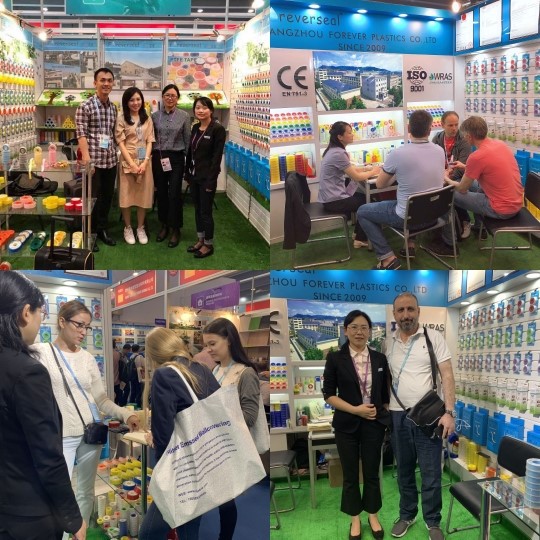
our exhibitions