Latest Products

Contact Us
- No.278, Qingxian Road, Linglong Street, Linan, Hangzhou, Zhejiang, China.
- fiona@foreverseal.com
- +8613396551886
Professional PTFE Tape and PTFE Film Suppliers
Foreverseal is a leading manufacturer of PTFE Tape and PTFE Film since 2009, providing first-class products and quality services. our well-equipped facilities and professional quality control through all stages of production enable us to guarantee total customers'satisfaction.
About Factory
Our company has 4 buildings and covering area of 6600m3, now we have over 60 workers, a team of qualified engineers and professional sales group. We have clean office building and good working environment.
Main Market
Europe, North America, South America, South-East Asia, North Africa and Mid-East. We have large production capacity and export more than 15x20ft containers per month. We can produce goods quickly and ship goods on time.
Research&Development
Since 2012, with significant investment in both Research&Development for all production line, we have already introduced automatic machines to improve the work efficiency and product quality.
Certificate
Our PTFE TAPE have obtained ISO9001, UL, DVGW, WRAS, ACS certificate. Stable and good quality lead us to keep long and standing business relations with old clients and get more new clients from middle & high quality markets.
Founded in 2009, Foreverseal is one of the world's largest manufacturers of high quality PTFE tape. More than 10 years development, foreverseal has successfully upgraded from the PTFE tape to the manufacturing of high-end ePTFE film industry.
In 2019, we have imported of the world-class precision calender and stretching equipment; And established PTFE film test laboratory; The expert who have engaged in the Fluorine industry more than 30 years led the whole technical team, providing us a strong technical for PTFE film and guide us to the new area of PTFE products in the future!
PTFE is a special material, lets work together to make it in a wider range of uses to fulfill the customers’ need and even the requires of the whole social development!
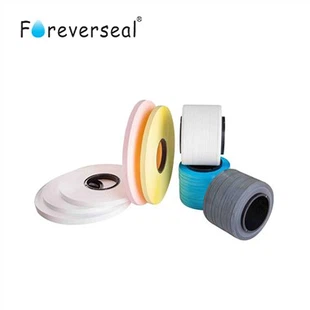 PTFE Wrapping Film
PTFE(Polytetrafluorethylene). Expanded, natural or colors. Thickness: 0.051mm - 0.254mm. Width: 4mm -200mm. Standard density: 1.60g/cm3
Add to Inquiry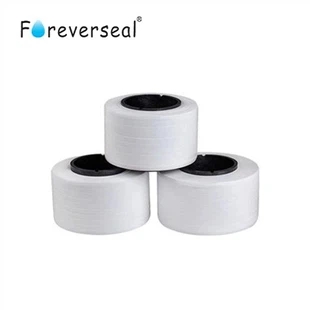 PTFE Film Tape
PTFE(Polytetrafluorethylene). Expanded, natural or white. Thickness: 0.102mm. Width: 4mm - 200mm. Standard density: 0.5-0.9g/cm3
Add to Inquiry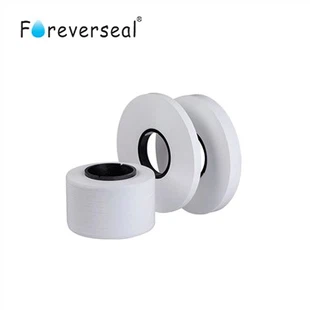 Thin PTFE Film
PTFE(Polytetrafluorethylene). Expanded, natural or white. Thickness: 0.051mm - 0.254mm. Width: 4mm -200mm. Standard density: 0.5g/cm3 - 0.9g/cm3
Add to Inquiry Porous PTFE Film
PTFE(Polytetrafluorethylene). Expanded, natural or white. Thickness: 0.051mm - 0.254mm. Width: 4mm -200mm. Standard density: 0.5g/cm3 - 0.9g/cm3
Add to Inquiry Unsintered Ptfe Tape
PTFE(Polytetrafluorethylene). Expanded, natural or white. Thickness: 0.051mm. Width: 4mm - 200mm. Standard density: 0.7g/cm3
Add to Inquiry Ptfe Film For Cable Factory
PTFE(Polytetrafluorethylene). Expanded, natural or white. Thickness: 0.051mm. Width: 4mm - 200mm. Standard density: 0.7g/cm3
Add to Inquiry High Dielectric Resistance Ptfe Film
PTFE(Polytetrafluorethylene). Expanded, natural or white. Thickness: 0.127mm. Width: 4mm - 200mm. Standard density: 0.7g/cm3
Add to Inquiry Electrical Insulation PTFE Film
PTFE(Polytetrafluorethylene). Expanded, natural or white. Thickness: 0.127mm. Width: 4mm - 200mm. Standard density: 0.7g/cm3
Add to Inquiry PTFE Film For Aerospace Cable
PTFE(Polytetrafluorethylene). Expanded, natural or white. Thickness: 0.127mm. Width: 4mm - 200mm. Standard density: 0.7g/cm3
Add to Inquiry PTFE Film For High Temperature Cable
PTFE(Polytetrafluorethylene). Expanded, natural or white. Thickness: 0.127mm. Width: 4mm - 200mm. Standard density: 0.7g/cm3
Add to Inquiry PTFE Wrapping Film For Electrical Cable
PTFE(Polytetrafluorethylene). Expanded, natural or white. Thickness: 0.127mm. Width: 4mm - 200mm. Standard density: 0.7g/cm3
Add to Inquiry PTFE Cable Insulation Film
PTFE(Polytetrafluorethylene). Expanded, natural or white. Thickness: 0.127mm. Width: 4mm - 200mm. Standard density: 0.75g/cm3
Add to Inquiry
We have three types of PTFE film according to customer's different request.
1. Low density PTFE film & tape produce micropore through stretch and under a certain specific and tightly controlled conditions to achieve low dielectric constant and high tensile strength.
It's light、soft、flame retardant and the low dielectric constant makes low density PTFE tapes for high frequency microwave coaxial cable applications in data transfer,military and medical field.
2. High density PTFE films/tapes provide superior electrical and chemical of the standard serious. It’s recommended for heating cables,aircraft and automotive cable in highly critical military,aerospace and high demand industrial.
3. Skived PTFE films are produced by processing virgin moulded PTFE through moulding and sintering to achieve the desired thickness with tight tolerancecontrol.
It's widely used in industries due to the material's outstanding characteris-tics, including heat and chemical resistance, dielectric strength and anti-stickproperties.
Benefits of PTFE Film
Durability and Versatility
PTFE film can withstand demanding conditions and is a highly flexible material. It can be applied to many surfaces, including metal, plastic, and rubber. The PTFE film has an excellent adhesive backing that ensures a strong and long-lasting bond.
Chemical Resistance
PTFE film adhesive tape offers excellent chemical resistance, making it ideal for jobs that need to withstand harsh environments. It is resistant to oils, solvents, gasses, and other chemicals, and can even be used in cryogenic applications. Additionally, it can be easily cut into different shapes to suit your needs.
Non-Stick Properties
PTFE film adhesive tape is a non-stick material, meaning it won’t easily absorb oils and other substances. This makes it ideal for jobs that involve heat or require a smooth, non-tacky surface that won’t easily pick up dirt and residue. It is also extremely easy to clean, making it a popular choice for machine maintenance.
Cost-Effective
PTFE film adhesive tape is also highly cost-effective. It can be used for a variety of industrial applications, and its non-stick nature ensures that it will last for a long time. This makes it an ideal option for those on a tight budget, as it can provide reliable protection at a fraction of the cost of other types of tape.
Types of Polytetrafluoroethylene Films
Polytetrafluoroethylene (PTFE) is a straight-chain crystalline thermoplastic with a white waxy feel similar to polyethylene. The surface feels smooth and its products are transparent or opaque.
Polytetrafluoroethylene air filter membrane:
The thickness is about 0.01mm, the air permeability is 60-80L/m2.s, it has the characteristics of smooth surface, chemical resistance, air permeability and water-tightness, large air permeability, flame retardant, high temperature resistance, strong acid and alkali resistance, non-toxicity, etc. It is widely used in flue gas dust removal and filtration of various industrial furnaces such as chemical industry, steel, metallurgy, carbon black, power generation, cement, and waste combustion; 3. Polytetrafluoroethylene clothing membrane: The thickness is about 0.03-0.05mm, the moisture permeability is ≥10000g/m2.24h, and the hydrostatic pressure is ≧150kPa. It is widely used in sportswear, cold-proof clothing, fire protection, public security, medical care, biochemical defense and other special clothing; shoes, hats, gloves, sleeping bags, tents, etc.
Polytetrafluoroethylene purification filter membrane:
Thickness is 0.02-0.03mm, bubble point ≥1kg/cm2 (5.3m/s127Pa), widely used in pharmaceutical, biochemical, microelectronics and laboratory consumables; air purification in dust-free workshops, laboratories, ventilation equipment, purification equipment, medical electronics and other occupations Suzhou New Materials Technology Co., Ltd. is a fluorine material film manufacturer integrating R&D, production and sales of ptfe air filter membranes, ptfe bubble point membranes and other microporous membranes, polytetrafluoroethylene films, Teflon films and coated filter materials.
1. The surface morphology of PTFE microporous film is a spider web-like microporous structure. Pores are formed between microfibers, and the arrangement direction of microfibers is basically parallel to the stretching direction; the connection point of the fiber bundle is the node, which is formed by many microfibers entangled and connected.
2. PTFE membrane is an asymmetric membrane, and the micropore size on the front and back of the membrane is different.
3. The micropore size of the cross section of the membrane is larger than the micropore size on its surface, and the micropore size in the longitudinal and transverse directions is also different, with the longitudinal micropore being larger than the transverse one.
4. The cross section of the membrane is a network structure, and there are very complex changes in the three-dimensional structure of the pores, such as mesh connection, pore sleeve, and channel bending. There may be multiple micropores forming a channel, or one micropore may be connected to multiple channels.
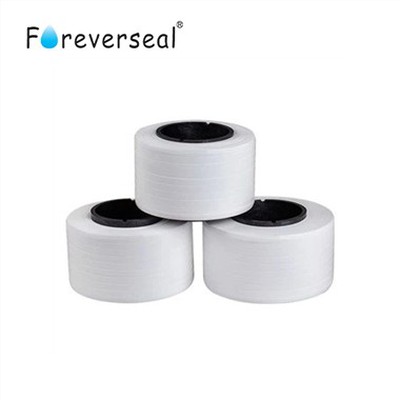
What is PTFE Film Tape used for?
Electrical Insulation
PTFE film tape exhibits excellent electrical insulation properties. It is used in the electrical industry for wrapping wires, cables, or connectors to provide a nonstick and heat-resistant layer. PTFE film tape helps protect against electrical shorts and insulates against high temperatures.
Packaging and Manufacturing
PTFE film tape is utilized in various packaging and manufacturing processes. It can be applied to machinery components to reduce friction, prevent sticking, and improve product flow. PTFE film tape is commonly used in packaging machinery, conveyors, chutes, and guide rails.
Printing and Graphics
PTFE film tape finds application in the printing and graphics industry. It is used as a nonstick surface on heat presses, laminating rollers, and other equipment. PTFE film tape prevents ink or adhesives from sticking to the equipment, allowing for smooth operation and easy cleanup.
Release Liners
PTFE film tape is used as a release liner for adhesive-backed materials, such as tapes, labels, and decals. It provides a nonstick surface that allows for easy release of the adhesive without leaving residue or damaging the material.
Food Processing
PTFE film tape is employed in the food industry for nonstick surfaces on heat-sealing equipment, conveyor belts, baking sheets, and other food processing equipment. It helps prevent food from sticking, simplifies cleaning, and maintains hygiene standards.
Industrial Applications
PTFE film tape finds use in various industrial applications where a nonstick surface, high-temperature resistance, or chemical resistance is required. It can be utilized in welding, sealing, sealing bars, slide surfaces, release sheets, and other industrial processes.
Difference Between PTFE membrane and TPU Membrane
PTFE membrane and TPU membrane are two materials with different chemical compositions, physical properties, application ranges and process characteristics. The following will introduce and compare PTFE membrane and TPU membrane in detail to better understand the differences between them.
PTFE membrane overview
PTFE (polytetrafluoroethylene) is a polymer material with strong acid resistance, alkali resistance, corrosion resistance, excellent low friction coefficient, low surface energy and extremely high temperature resistance. PTFE membrane is a single-layer or multi-layer film material made of polymerized tetrafluoroethylene. PTFE membrane has excellent chemical stability and is widely used in chemical, electronic, mechanical, aviation and other fields.
TPU membrane overview
TPU (thermoplastic polyurethane) is a new type of polymer material with good elasticity, wear resistance, tear resistance, cold resistance, high strength and other characteristics. TPU membrane is a film material made of TPU raw material. TPU membrane has excellent wear resistance and softness and is widely used in clothing, footwear, packaging, medical equipment and other fields.
Chemical composition
PTFE membrane is made of polymerized tetrafluoroethylene, while TPU membrane is made of thermoplastic polyurethane raw materials. PTFE membrane does not contain other materials in chemical composition, while TPU membrane can be adjusted by adding other chemical components.
Physical properties
PTFE membrane has extremely low surface energy and friction coefficient, and is resistant to acid, alkali, high temperature and corrosion. TPU membrane has good elasticity, softness and wear resistance. There are great differences in the physical properties of the two, and the applicable fields are also different.
Application range
PTFE membrane is mainly used in chemical, electronic, mechanical, aviation and other fields; TPU membrane is mainly used in clothing, footwear, packaging, medical equipment and other fields. The application ranges of the two have their own strengths and are applicable to different scenarios.
Process characteristics
PTFE membrane has a complex production process and needs to be prepared by chemical synthesis. It can also be made into a thin film by cutting or calendering. The production process of TPU membrane is relatively simple, and it is generally prepared by extrusion or calendering.
PTFE film production process
Raw material preparation
The production of PTFE film first requires the preparation of PTFE resin powder as raw material. The amount of resin powder directly affects the performance and quality of the film. When selecting resin powder, factors such as molecular weight, melt fluidity, and melting point need to be considered. Generally, resin powder with high molecular weight and low melting point is more suitable for the preparation of high-quality PTFE film.
Film preparation
●Resin powder pretreatment: The resin powder is screened to remove impurities and uneven particles. Then the screened resin powder is placed in a specific mold for pre-pressing preparation.
●Sintering: The pre-pressed resin powder is placed in a sintering furnace and sintered at high temperature. The purpose of sintering is to melt and combine the resin powder particles to form a uniform and dense film.
●Stretching: The sintered film will become more brittle and hard, and needs to be stretched to improve its flexibility and ductility. During the stretching process, the temperature and stretching speed need to be controlled to obtain the desired film thickness and performance.
●Determine the film thickness: By measuring the thickness of the film, its final specifications and uses can be determined. Commonly used measurement methods include microscopic observation, electron microscope scanning, etc.
Subsequent processing
●Surface treatment: The surface of PTFE film usually needs special treatment to increase its wettability and adhesion. Common surface treatment methods include plasma treatment, chemical treatment, etc.
●Inspection and quality control: The prepared PTFE film is inspected, including checking the film thickness, surface flatness, transparency and other indicators. At the same time, quality control is also required to ensure that the performance and quality of the film meet the requirements.
●Cutting and packaging: According to customer needs, the PTFE film is cut and packaged for easy transportation and use.
What Should be Paid Attention to When Using Ptfe, Polytetrafluoroethylene (Membrane)?
Front-end Process Of Ptfe Microporous Film
The raw material of PTFE membrane is granular PTFE resin, which is a homopolymer of tetrafluoroethylene. It cannot be processed by ordinary thermoplastic molding method. There are many products of PTFE resin powder abroad, and there are also a few manufacturers in China.
Preparation Process
The conventional production process is to mix polytetrafluoroethylene dispersion resin with liquid additives, make the mixture into thin sheets by calendering, and then use a machine to biaxially stretch the thin sheets to obtain PTFE microporous membrane. The process flow is: PTFE resin, extrusion aid (material selection) - mixing - calendering - biaxial stretching - winding.
Production Process
Preparation of base film: A good base film must be uniform in thickness, with reasonable crystallinity and density. The quality of the base film directly affects the performance indicators of the finished product. When preparing the base film, the following items should be noted:
●Raw material selection: PTFE resin should be selected with a more suitable molecular weight, and its performance can withstand high-speed strain under high temperature conditions during stretching without breaking; The extrusion aid should be selected to make the resin moist, non-toxic, high boiling point, easy to remove without residue.
●Proportion: According to the resin and extrusion aid brand used, it is prepared in an appropriate proportion. The extrusion aid generally ranges from 12% to 28%.
●Compression ratio: The compression ratio is also an important parameter affecting the product performance indicators. The compression ratio is large, the longitudinal fiberization strength is high, it is not easy to break during stretching, it is easy to produce continuously, and its product strength is also large. If the compression ratio is too large, the extrudate is too hard, which is not conducive to the normal production of subsequent processes. Therefore, the compression ratio should be reasonably selected according to the resin brand, equipment, and production process.
Stretching temperature and stretching rate
PTFE microporous membrane molding process is more commonly used in foreign countries by biaxial stretching, i.e., extension processing method. PTFE can be stretched between room temperature and 327℃, that is, the stretching below the melting point stage is carried out in a highly elastic state. Stretching at low temperature will cause the film to rupture, making it impossible to stretch. When it is higher than 327℃, the crystal state between PTFE molecules changes to amorphous, and the network structure cannot be obtained well. Therefore, the general stretching temperature is between 40℃ and 327℃.
In production, the stretching temperature is related to the stretching rate and speed, and also depends on the strength and size of the product. At high temperature, the film is softer and easier to stretch, has good dimensional stability, and is not easy to shrink. However, if the temperature is too high, the strength of the product will decrease, which may also lead to breakage. The greater the stretching rate, the higher the required temperature, because the lower the stretching temperature, the greater the tensile force required. When the tensile force exceeds the strength that the stretched product can withstand, it will break; Conversely, the stretching rate is small and the temperature can be lower. The difference in temperature also directly affects the performance indicators of its products. Therefore, in production, it is necessary to find the optimal range suitable for specific processes and equipment.
Our Factory
Our company has 4 buildings and covering area of 6600m3, now we have over 60 workers, a team of qualified engineers and professional sales group. We have clean office building and good working environment.


Production Market
Our main market is Europe, North America, South America, South-East Asia, North Africa and Mid-East. We have large production capacity and export more than 15x20ft containers per month. Our annual export volume reach 5-8 million USD.
Our Certificate
-

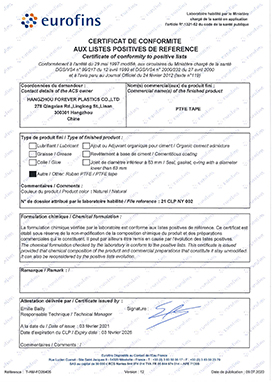
ACS
-


ISO9001
-
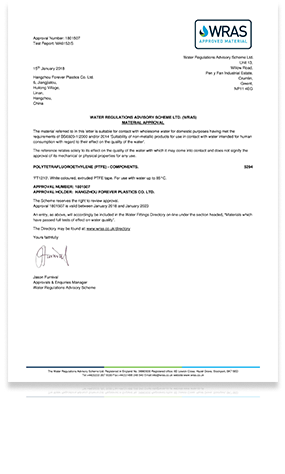
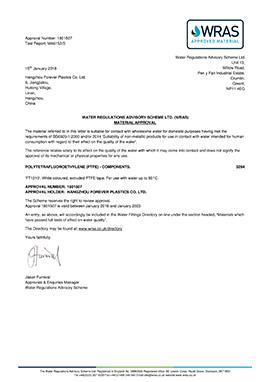
WRAS
-


UL
-


ROHS
-

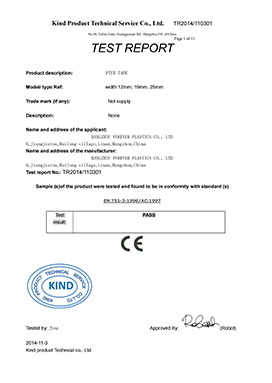
CE
-

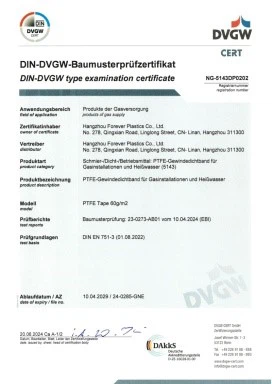
DVGW
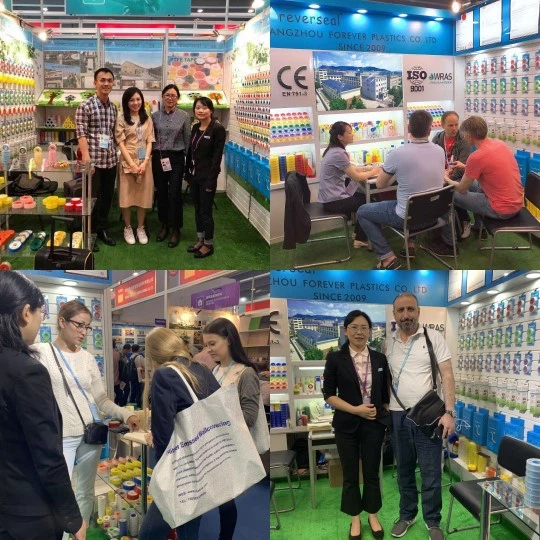
Our exhibitions