Latest Products

Contact Us
- No.278, Qingxian Road, Linglong Street, Linan, Hangzhou, Zhejiang, China.
- fiona@foreverseal.com
- +8613396551886
Hangzhou Forever Plastics Co., Ltd located in Linan, Hangzhou, China. It is a professional manufacturer and exporter of high quality ptfe tape and ptfe film, which was established in 2009. We are not the largest one, but the best partner you need.
Since 2012, with significant investment in both Research&Development for all production line, we have already introduced automatic machines to improve the work efficiency and product quality. From mixing, calendering, stretching, slitting, rewinding and packing, our well-equipped facilities and professional quality control through all stages of production enable us to guarantee total customers’satisfaction.
Why Choose Us
Factory
Our company has 4 buildings and covering area of 6600m3, now we have over 60 workers, a team of qualified engineers and professional sales group. We have clean office building and good working environment.
Global Shipping
Our main market is Europe, North America, South America, South-East Asia, North Africa and Mid-East. We have large production capacity and export more than 15x20ft containers per month. We can produce goods quickly and ship goods on time.
Our Certificate
Our PTFE TAPE have obtained ISO9001, UL, DVGW, WRAS, ACS certificate. Stable and good quality lead us to keep long and standing business relations with old clients and get more new clients from middle & high quality markets.
Professional Team
We believe our good quality products and professional customer service can maintain long term stable business with our clients. If you are interested in our goods, please contact us freely. Welcome to visit our factory!
 Ptfe Transparent Film
PTFE(Polytetrafluorethylene). Expanded, natural or white. Thickness: 0.03 - 3mm . Width: 4mm - 200mm. Standard density: 2.15g/cm3
Add to Inquiry Ptfe Skived Film
PTFE(Polytetrafluorethylene). Expanded, natural or white. Thickness: 0.03 - 3mm . Width: 4mm - 200mm. Standard density: 2.15g/cm3
Add to Inquiry Ptfe Skived Film For RF Microwave Coaxial Cable
Ptfe skived film for RF microwave coaxial cable is made by skiving and processing PTFE into a thin film. There are a wide variety of width and thickness. Engineers produce sintered, or full density,
Add to Inquiry Full Density Electric Insulation Ptfe Film
Full density electric insulation ptfe film has a number of unique properties that make it useful in a variety of industrial applications. It is highly resistant to heat, chemicals, and moisture, and
Add to Inquiry Skived Ptfe Film For Wire And Cable
Skived ptfe film for wire and cable is a thin and flexible sheet made of polytetrafluoroethylene (PTFE), which is commonly known as Teflon. Skiving is a process used to create very thin films or
Add to Inquiry White Sintered Full Density PTFE Insulation Tape
White sintered full density PTFE Insulation Tape is a specialized material with unique properties that make it an excellent choice for a wide range of applications, including filtration, insulation,
Add to Inquiry White Full Density Ptfe Film For Cable
PTFE is a synthetic fluoropolymer that has excellent resistance to chemicals, heat, and electricity. It is widely used in various applications, including non-stick coatings, gaskets, and seals.
Add to Inquiry PTFE Insulation Film For Aerospace
In the aerospace industry, PTFE insulation film for Aerospace is used in fuel tank vents and breathers, as well as in hydraulic and pneumatic systems. The material's high porosity and chemical
Add to Inquiry Sintered Full Density Ptfe Skived Film
Sintered full density ptfe skived film is highly porous, with a pore size ranging from 0.1 to 100 microns. This porosity makes the material an excellent choice for filtration applications, as it can
Add to Inquiry Full Density Ptfe Skived Film
Full density ptfe skived film is consist of suspension PTFE resin by moulding, sintering, cooling into blank, then cutting and rolling into film. PTFE film has excellent dielectric properties,
Add to Inquiry Sintered Full Density PTFE Film
Sintered full density PTFE Film is produced by a process called sintering, which involves heating the PTFE powder to a high temperature and pressure to create a solid, dense material. This material
Add to Inquiry Sintered PTFE (Polytetrafluoroethylene) Film
Sintered PTFE (Polytetrafluoroethylene) film is a specialized material that has become increasingly popular in various industries, including medical, aerospace, and semiconductor manufacturing. It is
Add to Inquiry
Skived PTFE film is manufactured from virgin PTFE resins which are molded, sintered, and skived to the appropriate thickness. IT is widely used in a number of industries due to the material’s outstanding characteristics, including heat and chemical resistance, dielectric strength and anti-stick properties.
Skived PTFE films enjoy high purity thanks to high-quality resins, with no staining or contamination. They provide extreme stability at a wide range of temperatures (from cryogenic to 500°F (260°C)) and chemical resistance that’s practically universal and unaffected by the vast majority of chemicals. Saint-Gobain® manufacturing enables extremely tight tolerances with high thickness uniformity across the entire width and length. Skived PTFE films are used for a wide variety of specialty applications.
Benefits of Skived PTFE Film
Effective release
Excellent option for applications that require easy release and lack of adhesive residue, such as composite molding, packaging equipment and heat sealing.
Chemically inert
The chemical inertness of PTFE skived film and silicone tape ensures that they remain stable, durable, and reliable when exposed to a wide range of chemicals.
Low coefficient of friction PTFE film
Reduced friction leads to improved efficiency and enhances the lifespan of components and equipment.
Thin and conformable
Skived PTFE tape is highly conformable with 300% elongation.
Type of Skived PTFE Film
Air Filter Membrane
PTFE filter membrane can be used for atmospheric dust removal, air purification, etc. The pore size of the membrane can be controlled to 0.2um, and the porosity can reach more than 88%. It is compounded with needle felt, machine-made cloth, non-woven fabric, glass fiber and other filter materials to obtain a coated filter material with surface filtration performance. The PTFE coated filter material has the characteristics of high peel strength, large air permeability, and uniform pore size distribution. As a dust bag or pleated dust filter cartridge installed in the dust removal equipment, it will quickly and effectively intercept ultrafine dust calculated in microns.
Waterproof And Breathable Microporous Membrane
The polytetrafluoroethylene waterproof and breathable microporous membrane is made by a special process and biaxial stretching. The membrane surface can reach billions of micropores per square inch. The diameter of each micropore (0.1um-0.5um) is smaller than the minimum value of the smallest mist in the water molecule (20um-100un), and is much larger than the diameter of the water vapor molecule (0.0003um-0.0004um). It can allow water vapor to pass through but water droplets cannot pass through. This microporous structure can achieve excellent waterproof and breathable functions; in addition, because the pores are extremely small and arranged in irregular longitudinal bending, the wind cannot pass through, so it has the characteristics of windproof and good warmth retention.
Polytetrafluoroethylene Bubble Point Membrane
It uses polytetrafluoroethylene (PTFE) as raw material, and after expansion and stretching, it forms a microporous film. This film is laminated on various fabrics and substrates using a special process to become a new type of filter material. The membrane has a small pore size of about 0.2-0.5μm, is evenly distributed, and has a large porosity. While maintaining air circulation, it can filter all dust particles including bacteria, achieving the purpose of advanced purification and ventilation.
Application of Skived PTFE Film
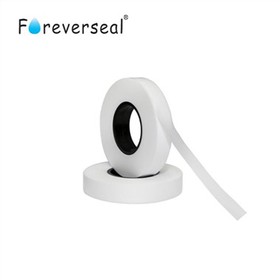
Electrical Industry
Skived PTFE film is extensively utilized as an insulating material in the electrical industry due to its excellent dielectric properties. It’s applied in cables, capacitors, and other electrical components to ensure safety and efficiency.

Industrial Manufacturing
In industrial settings, the film serves as a release liner, preventing adhesion during the manufacturing process. Its non-stick properties make it ideal for molds, chute linings, and conveyor systems.
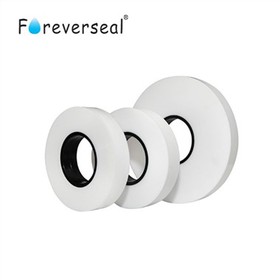
Medical Field
Skived PTFE film finds use in medical applications due to its biocompatibility and resistance to harsh chemicals. It is used in medical tubing, catheters, and as a non-stick surface for medical devices.

Aerospace Engineering
The film is employed as a protective barrier against extreme temperatures and chemicals in aerospace applications, contributing to the durability and safety of components.
Skived PTFE Film membrane production process
Skived PTFE film (PTFE) membrane is a high-performance special material with excellent high temperature resistance, corrosion resistance, and chemical resistance. It is widely used in electrical, chemical, aerospace, medical and other fields.
The production process of PTFE membrane mainly includes the following steps:
Pretreatment of PTFE material: PTFE material is usually granular and needs to undergo a series of pretreatment processes to improve the processability of the material. First, the PTFE particles need to be crushed to obtain powdered PTFE material. Then, the PTFE material is dispersed through heating and mixing to improve its fluidity.
Compression molding: The pretreated PTFE powder is placed in a mold and then molded by hot pressing. High pressure and high temperature are applied in the mold to melt and fuse the PTFE powder particles together to form a uniform PTFE material. The temperature and pressure need to be controlled during the compression molding process to ensure the quality and performance of the PTFE membrane.
Film stretching: The PTFE material obtained after compression molding also needs to be stretched to improve its mechanical properties and dimensional stability. Put the PTFE material into the stretching machine, apply stretching force to stretch it at high temperature, so that the molecular chain of PTFE is arranged more orderly, and the strength and stability of the membrane are improved.
Surface treatment: The surface of the PTFE membrane after stretching is relatively smooth, and surface treatment is required to improve its wettability and adhesion. Common surface treatment methods include oxidation, plasma treatment, etc.
Post-treatment: The PTFE membrane after surface treatment also needs to be post-treated to remove possible residual harmful substances, such as monomers and solvents that have not been completely reacted. Common post-treatment methods include drying, washing, etc.
Testing and packaging: Finally, the PTFE membrane is tested to check whether its quality and performance meet the requirements. After the qualified PTFE membrane is tested, it is packaged to ensure that the quality of the membrane is not contaminated and damaged.
The production process of PTFE membrane includes pretreatment, compression molding, film stretching, surface treatment, post-treatment, testing and packaging. Each step requires strict control of parameters such as temperature, pressure and processing time to ensure that the quality and performance of the final product meet the requirements.
Cutting Skived PTFE Films for Insulation and Friction
Skived PTFE Films are thin, flexible sheets made from polytetrafluoroethylene (PTFE), a synthetic fluoropolymer of tetrafluoroethylene. These films have revolutionized insulation and friction in various industries such as food, pharmaceuticals, and electronics.
One of the critical reasons Skived PTFE Films are highly sought after in these industries is their outstanding insulation properties. PTFE is known for its exceptional electrical insulating capabilities, making it an ideal material for applications where electrical conductivity needs to be minimized or eliminated entirely. This makes Skived PTFE Films perfect for use in electronic devices and components requiring high electrical insulation levels.
Additionally, Skived PTFE Films offer extremely low friction characteristics. The film's surface has a very low coefficient of friction, which means that it resists sticking to other materials and allows for easy movement or sliding. This property is especially beneficial in industries such as food processing and pharmaceuticals, where materials must slide smoothly without any resistance or damage.
In the food industry, Skived PTFE Films find extensive use as release liners on conveyor belts and baking sheets. These films prevent food products from sticking to surfaces during processing or cooking, improving productivity and reducing waste. Furthermore, the non-toxic nature of PTFE ensures that there is no contamination risk to the food being processed.
Similarly, Skived PTFE Films play a crucial role in releasing liners on tablet presses and blister packaging machines in the pharmaceutical industry. By preventing adhesion between medications and machinery surfaces during manufacturing processes, these films help maintain product integrity and ensure accurate dosing.
Furthermore, pump manufacturers rely on skived PTFE diaphragms because they offer superior chemical resistance and excellent flex life characteristics. pump diaphragms made from skived virgin grade Teflon withstand aggressive chemical attacks while maintaining their shape over extended periods of time.
Skived PTFE Films are also widely used as storage tank liners, especially in industries where aggressive chemicals or corrosive substances are stored. These films provide an excellent barrier against chemical attacks and help maintain the integrity of the storage tanks.
①: PTFE non-stick coating can be used continuously at 260℃, with a maximum operating temperature of 290-320℃, extremely low friction coefficient, good wear resistance and excellent chemical stability. It cannot be injection molded, but can be extruded or used as a coating.
②: FEP non-stick coating melts and flows during baking to form a non-porous film, with excellent chemical stability and excellent non-stick properties. The maximum operating temperature is 200℃, the melting point is 270℃, and it can be injection molded and extruded.
So PTFE material is much more practical than FEP. The reason is very simple because of its characteristics: Both polytetrafluoroethylene PTFE and FEP have extremely strong corrosion resistance and chemical stability. The physical properties of PTFE material are harder than FEP, and the temperature resistance is higher than FEP, about 200 degrees, but PTFE is difficult to form, so many accessories with complex shapes are made of FEP. From the color point of view: PTFE is white and opaque, FEP is grayish white and translucent. Related links PVDF is polyvinylidene fluoride, which is slightly inferior to PTFE and FEP, with low temperature resistance and slightly poor corrosion resistance. The price is much cheaper than PTFE and FEP.
PTFE's temperature resistance, corrosion resistance, and anti-sticking performance are better than FEP. PTFE can resist corrosion from any medium. Its color is absolutely white. It is generally used for fluorine-lined pipes, valves, seals, rods, etc. FEP is polyperfluoroethylene propylene, which is transparent in color and has the same corrosion resistance as PTFE. It is generally used for fluorine-lined pumps or perfluoro pumps PTFE+FEP=F50 is fluoroplastic alloy. This material is also often used in fluoroplastic pumps. The two are used together to increase wear resistance.
How to Maintain Skived Ptfe Film
Semi-finished products such as sintered polytetrafluoroethylene (PTFE, hereinafter referred to as PTFE) tubes, rods and sheets can be turned into the final required shape and size by machine tools like metal and wood. Therefore, turning is an important way to increase PTFE products. However, as an engineering plastic, PTFE has many obvious differences in hardness, elasticity, expansion rate and other aspects from raw materials such as metal and wood, so special attention should be paid during turning. The following is a brief list of several precautions that need to be focused on, combined with some problems in the actual production and application process:
Lathe. The lathe for skived pTFE film products is the same as the lathe for turning ordinary metal materials, but because PTFE, especially some filled PTFE materials, has high hardness and relatively low toughness, this requires a higher speed of the lathe.
Turning tool. The turning tool is the main tool for skived pTFE film. The surface finish and angle of the turning tool are directly related to the surface finish and thickness tolerance of the part. The turning tool for turning other PTFE products can be made of white steel or carbide steel. Although PTFE plastic is relatively soft, the degree of wear on the tool is the same as that of processing metal parts. Especially when turning filled PTFE, the tool will quickly become blunt, so carbide steel should be used.
Mandrel. The mandrel is tightly matched with the inner hole of the PTFE blank. The outer diameter of the mandrel depends on the inner hole of the blank. Most of them are made of 45# steel. The surface has a longitudinal groove of about 1mm deep, with an angle of 60° or 90°. The end is mounted on the pulley to rotate synchronously.
The internal stress generated by PTFE during the pressing and sintering process will affect the dimensional stability of the product during mechanical processing. Therefore, the semi-finished product after sintering must be placed for 24 hours or annealed to eliminate the internal stress before mechanical processing. The annealing temperature is generally about 50℃ higher than the use temperature and shall not exceed 327℃.
Our Factory
Our company has 4 buildings and covering area of 6600m3, now we have over 60 workers, a team of qualified engineers and professional sales group. We have clean office building and good working environment.


Our Certificate
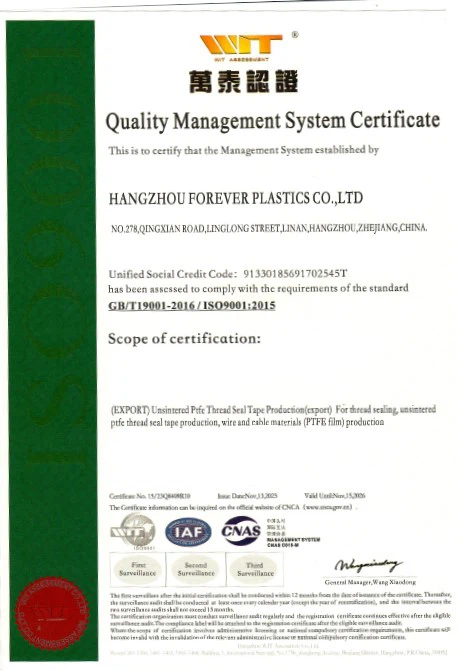
ISO9001
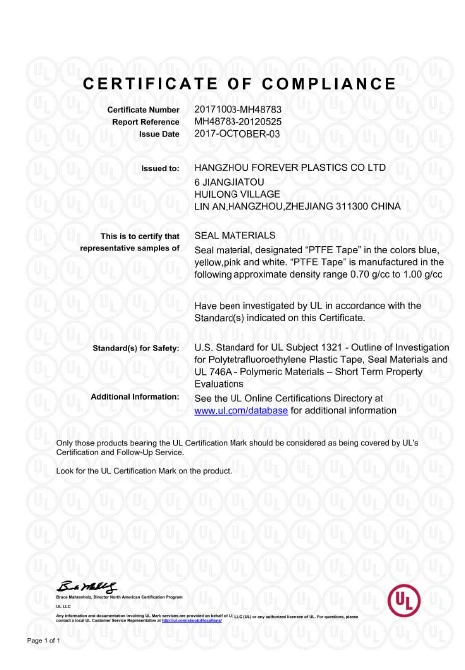
UL
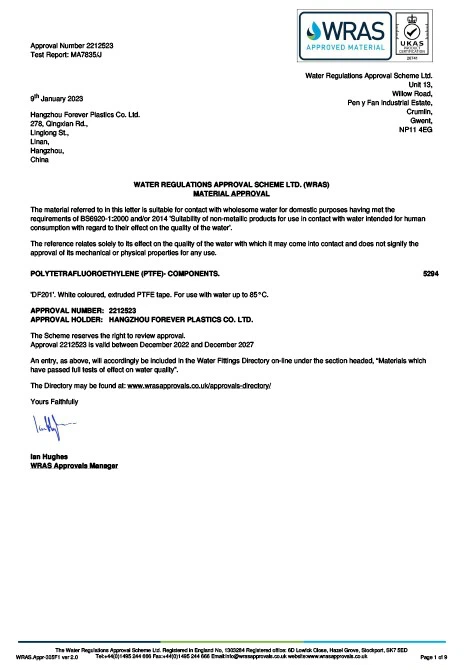
WRAS
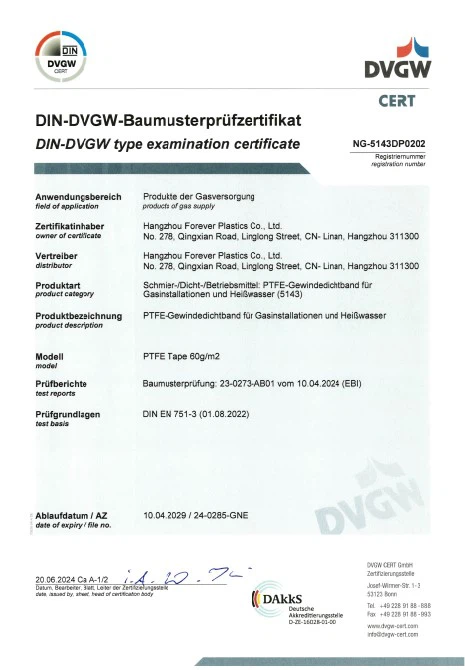
DVGW
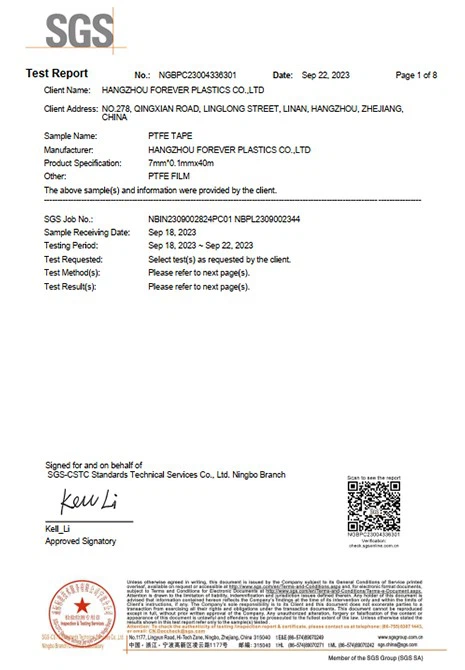
ROHS

ACS
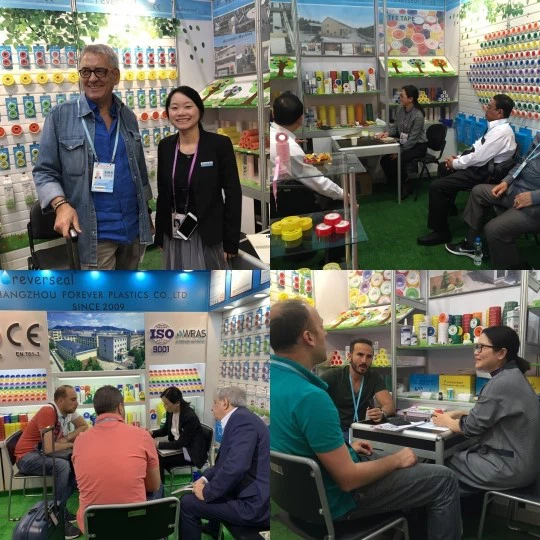
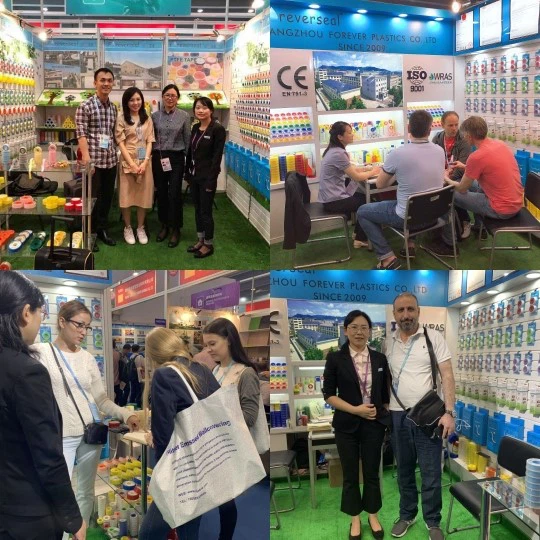
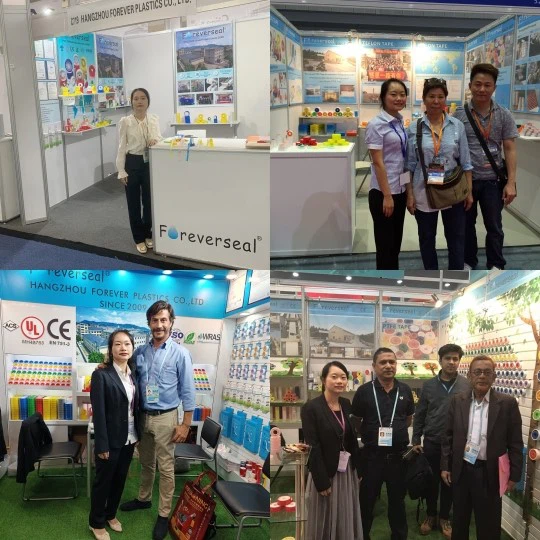
Our Exhibitions