

Latest Products

Contact Us
- No.278, Qingxian Road, Linglong Street, Linan, Hangzhou, Zhejiang, China.
- fiona@foreverseal.com
- +8613396551886
Hangzhou Forever Plastics Co., Ltd located in Linan, Hangzhou, China. It is a professional manufacturer and exporter of high quality ptfe tape and ptfe film, which was established in 2009. We are not the largest one, but the best partner you need.
Since 2012, with significant investment in both Research&Development for all production line, we have already introduced automatic machines to improve the work efficiency and product quality. From mixing, calendering, stretching, slitting, rewinding and packing, our well-equipped facilities and professional quality control through all stages of production enable us to guarantee total customers’satisfaction.
Why Choose Us
Factory
Our company has 4 buildings and covering area of 6600m3, now we have over 60 workers, a team of qualified engineers and professional sales group. We have clean office building and good working environment.
Global Shipping
Our main market is Europe, North America, South America, South-East Asia, North Africa and Mid-East. We have large production capacity and export more than 15x20ft containers per month. We can produce goods quickly and ship goods on time.
Our Certificate
Our PTFE TAPE have obtained ISO9001, UL, DVGW, WRAS, ACS certificate. Stable and good quality lead us to keep long and standing business relations with old clients and get more new clients from middle & high quality markets.
Professional Service
We believe our good quality products and professional customer service can maintain long term stable business with our clients. If you are interested in our goods, please contact us freely. Welcome to visit our factory!
 PTFE Tape For Pipe Sealing
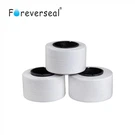
Size: 12mmx0.1mmx12mx0.6g/cm3. Spool OD/ID: 56mm OD, 25mm ID. Spool/Cover color: White/Yellow. Tape color: White. MOQ: 20000 pcs
Add to Inquiry PTFE Tape For HVAC Systems
Size: 12mmx0.1mmx12mx0.6g/cm3. Spool OD/ID: 56mm OD, 25mm ID. Spool/Cover color: White/Yellow. Tape color: White. MOQ: 20000 pcs
Add to Inquiry PTFE Dichtband / Gewindedichtband
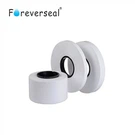
Size: 12mmx0.1mmx12mx0.6g/cm3. Spool OD/ID: 56mm OD, 25mm ID. Spool/Cover color: White/Yellow. Tape color: White. MOQ: 20000 pcs
Add to Inquiry Plumbing Tape To Stop Leaks
Size: 12mmx0.1mmx12mx0.55g/cm3. Spool OD/ID: 56mm OD, 25mm ID. Spool/Cover color: White/Yellow. Tape color: White. MOQ: 20000 pcs
Add to Inquiry Teflon Tape On Hot Water Heater
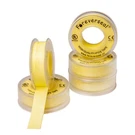
Size: 12mmx0.1mmx12mx0.55g/cm3. Spool OD/ID: 56mm OD, 25mm ID. Spool/Cover color: White/Yellow. Tape color: White. MOQ: 20000 pcs
Add to Inquiry PTFE Plumbers Tape DVGW DIN
Size: 12mmx0.1mmx12mx0.6g/cm3. Spool OD/ID: 56mm OD, 25mm ID. Spool/Cover color: White/Yellow. Tape color: White. MOQ: 20000 pcs
Add to Inquiry DVGW Certified PTFE Tape For Gas
Size: 12mmx0.1mmx12mx0.6g/cm3. Spool OD/ID: 56mm OD, 25mm ID. Spool/Cover color: White/Yellow. Tape color: White. MOQ: 20000 pcs
Add to Inquiry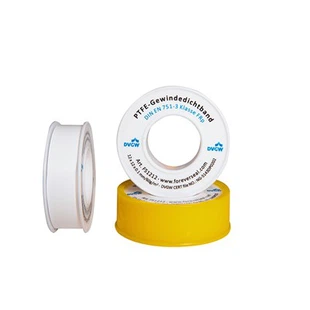 PTFE Thread Sealing Tape DVGW
Size: 12mmx0.1mmx12mx0.6g/cm3. Spool OD/ID: 56mm OD, 25mm ID. Spool/Cover color: White/Yellow. Tape color: White. MOQ: 20000 pcs
Add to Inquiry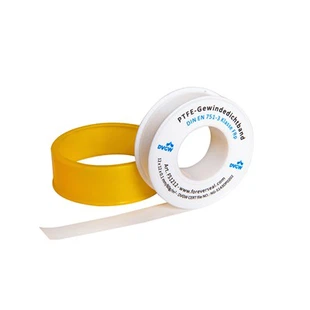 PTFE Tape DVGW Certificate DIN EN751-3
Size: 12mmx0.1mmx12mx0.6g/cm3. Spool OD/ID: 56mm OD, 25mm ID. Spool/Cover color: White/Yellow. Tape color: White. MOQ: 20000 pcs
Add to Inquiry Teflon Tape On Water Lines
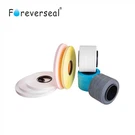
Size: 12mmx0.075mmx12mx0.47g/cm3. Spool OD/ID: 56mm OD, 25mm ID. Spool/Cover color: White/Light Blue. Tape color: White. MOQ: 20000 pcs.
Add to Inquiry Ptfe Tape For Pipe Leakage
Size: 12mmx0.075mmx12mx0.46g/cm3. Spool OD/ID: 56mm OD, 25mm ID. Spool/Cover color: White/Light Blue. Tape color: White. MOQ: 20000 pcs.
Add to Inquiry Pipe Thread Sealant Tape
Size: 12mmx0.075mmx12mx0.44g/cm3. Spool OD/ID: 56mm OD, 25mm ID. Spool/Cover color: White/Light Blue. Tape color: White. MOQ: 20000 pcs.
Add to Inquiry
White plumbers tape is widely used by plumbers for General Water Plumbing applications. It is economical and used for all purpose.
White plumbers tape is made from polytetrafluoroethylene(PTFE). PTFE is a fluoropolymer. It is the same substance used on nonstick cookware and also used to make eyeglasses and razor blades. PTFE is nonflammable and nontoxic.
White plumbers tape has a unique construction with various characteristics that make it ideal for plumbing projects. The tape has no adhesive. It won't stick to the pipes, making it easy to remove. Nothing will stick to it either, so it will not be hard to undo a pipe connection for maintenance or repairs in the future.
White plumbers tape is different from other kinds of tape. For instance, tapes you may have used around the house have adhesive on one or both sides to seal or adhere two surfaces together. white plumbers tape is not sticky, but it works very well in plumbing projects to ensure a tight fit between two pipes when they join together.
This pipe wrap tape serves as a lubricant and sealant for the threads of the pipes. It is slippery but not sticky, and conforms to the spaces between threads. It works very well for ensuring a tight and secure connection yet allows for easy disassembly when needed.
This product not only seals and lubricates pipe threads but also helps reduce the risk of threads getting stuck, thanks to the smooth surface that acts as a buffer.
Tips for Using White Plumbers Tape
TIP 1: Choosing the right type of tape
Select tape that is suitable for the type of pipes and fittings you are working with. There are different variations available, including tapes designed for water, gas, or specific materials like stainless steel. White plumbers tape is suitable for water pipe, if other application, you should choose other tape (welcome to contact us to help you choose the right type)
TIP 2: Proper application for different plumbing materials
Different materials require different application techniques. For instance, when working with plastic pipes, avoid overtightening, as it may cause damage. For metal pipes, apply slightly more tape to ensure a secure seal.
TIP 3: Ensuring a tight seal
Stretch and press the tape into the threads as you wrap it. This will help create a snug fit and prevent gaps that could lead to leaks.
TIP 4: Wrapping threads correctly
Always wrap the tape in the direction of the threads. This ensures that when you tighten the connection, the tape stays in place and doesn’t unravel.
TIP 5: Preventing common mistakes
Avoid overusing white plumbers tape, as excessive layers can lead to overtightening and leaks. Additionally, remember that tape is not a fix for damaged threads or significant pipe issues.
When Should You Not Use white plumbers tape?
Compression Fittings: Compression fittings, which create a seal by compressing a soft washer or ring against the pipe, do not require white plumbers tape. Using tape in these fittings can actually hinder their effectiveness and cause leaks.
Flare Fittings: Similar to compression fittings, flare fittings create a seal without the need for tape. Adding tape here can prevent the fitting from forming a proper seal and lead to gas or liquid leaks.
Threaded Joints on Garden Hoses: Garden hoses often have threaded connectors, but using white plumbers tape on these connections can lead to over-tightening and damage. Instead, use a rubber washer to create a proper seal.
Electrical Connections: White plumbers tape is not suitable for electrical connections. Its properties are tailored for plumbing applications, and using it in electrical work can lead to unsafe conditions.
Incompatible Materials: If you’re working with certain materials that can corrode or degrade the tape, such as certain chemicals or strong solvents, i’s best to avoid using white plumbers tape. It’s essential to consider the compatibility of materials.
High-Temperature Applications: While white plumbers tape is heat-resistant, there are specific high-temperature applications where it may not perform well. In these cases, look for specialized tape designed for extreme heat.
Critical Connections: In situations where a secure and reliable connection is crucial, such as gas lines or industrial applications, i’s advisable to consult with professionals or adhere to manufacturer recommendations rather than relying solely on white plumbers tape.
How to Fix the leakage by using white plumbers tape
Locate the Source
Locate the source of the leak. This may be a dripping faucet, a leaking pipe, or a hole in your plumbing. You can find the source of the leak by looking for wet spots on your walls, ceilings, or floors. Another way to locate the leak is to turn off all water appliances in your home and then check your water meter. If the needle on the meter is moving, that means there is a water leak somewhere in your home. Be careful not to confuse the leak with condensation, which can also cause wet spots on your walls or ceilings.
Turn off the Water Supply
Once you’ve located the leak, turn off the water supply to your home. This will prevent any further damage from occurring. Make sure to turn off the power to your home as well, as water and electricity don’t mix! Because you’ll be working with water, it’s always better to err on the side of caution.
Drain the Water From the Pipes
Now that you’ve turned off the water supply, water will still be in the pipes. To get rid of this water, turn on all the faucets in your home and let the water drain out. Once the water has drained, turn off the faucets and dry the area around the leak.
Remove the Fixture
Now that the water is turned off, you can remove the leaking fixture. This may involve unscrewing some screws or bolts, depending on the fixture type. Once the fixture is removed, take a look at the area around the leak. If there is any damage, such as a cracked pipe, you’ll need to repair or replace that section before continuing.
Clean the Surface
Clean the surface around the leak with a clean cloth. Be sure to remove any dirt, grime, or debris. This will ensure that the plumber’s tape will adhere properly. If dirt or debris is present, the tape may not stick or may come loose over time.
Apply the Tape
Cut a piece of plumber’s tape that is long enough to wrap around the pipe. Wrap the tape around the pipe clockwise, covering the entire surface. It’s important to wrap the tape tightly to form a watertight seal. If the tape is too loose, water may still leak through.
Screw the Fixture Back in Place
Screw the fixture back into place. Be careful not to overtighten the screws or bolts, as this could damage the pipe. Once the fixture is snug, turn on the water supply to your home and check for leaks.
Test for Leaks
Turn on the water to your home and test the area around the leak for any signs of water. If there are no leaks, you’re all set! If there are still leaks, check to see if the plumber’s tape is properly applied. If the tape is not applied correctly, remove it and reapply it. Make sure to press the tape firmly into place to make good contact with the surface.
Removing white plumbers tape, also known as Teflon tape or thread seal tape, is a relatively straightforward process.
Unscrew the Connection
If the threaded connection is still assembled, start by gently unscrewing the pipes or fittings from each other. Turn the connection counterclockwise to loosen and separate them.
Peel off the Tape
Once the connection is disassembled, you’ll notice the white plumbers tape wrapped around the threads. Begin by peeling off the tape carefully. You can use your fingers to grip the edge of the tape and peel it away from the threads.
Avoid Tearing
Take care not to tear the tape while removing it. If you encounter resistance or find that the tape is not coming off smoothly, you can use a pair of pliers to grip the edge of the tape and gently peel it away.
Clean the Threads
After removing the tape, you may notice residual adhesive or bits of tape on the threads. Use a clean cloth or paper towel to wipe away any leftover tape remnants. Ensure that the threads are clean and free from debris.
Inspect for Damage
While removing the tape, inspect the threads for any signs of damage or wear. If you notice any damaged threads, it’s advisable to address the issue before reapplying new tape and reassembling the connection.
Reapply New Tape (if needed)
If you’re planning to reuse the connection and want to ensure a proper seal, you can reapply fresh tape to the threads before reassembling. Follow the proper techniques for applying new tape as outlined in previous responses.
Reassemble the Connection
Once you’ve removed the old tape and cleaned the threads, you can reassemble the connection. Make sure to screw the pipes or fittings together tightly to create a secure seal.
What Types of Fittings Can Plumber’s Tape be Used on?

Pipe couplings: Plumber’s tape is commonly used when connecting pipe couplings, which are fittings used to join two pipes together.
Elbows: Elbows are fittings that change the direction of the pipe. Plumber’s tape helps create a tight seal when connecting pipes to elbow fittings.
Tees: Tees are fittings that create a T-shaped junction in a plumbing system. Plumber’s tape is used to ensure a secure seal when connecting pipes to tee fittings.
Unions: Unions are fittings that allow for easy disconnection of pipes for maintenance or repairs. Plumber’s tape is applied to the threaded connections of unions to prevent leaks when the pipes are joined.
Valves: Plumber’s tape is commonly used when installing valves, such as ball valves or gate valves, to create a tight seal at the threaded connections.
Showerheads and faucets: Plumber’s tape is applied to the threads when connecting showerheads or faucets to water supply pipes, ensuring a secure and leak-free connection.
Hose fittings: Plumber’s tape can be used on hose fittings, such as connectors or adapters, to prevent leaks at the threaded connections.
Our Factory
Our company has 4 buildings and covering area of 6600m3, now we have over 60 workers, a team of qualified engineers and professional sales group. We have clean office building and good working environment.


Our Certificate

ISO9001

UL

WRAS

DVGW

ROHS

ACS
Our Exhibitions


