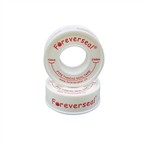
Polytetrafluoroethylene (PTFE) is one of the most representative materials in the modern fluoropolymer family. With its excellent chemical inertness, thermal stability and non-adhesiveness, it has become an irreplaceable functional material in many demanding industrial scenarios. For material suppliers, mechanical parts manufacturers and high-performance coating companies, a deep understanding of the structure, preparation process and application potential of PTFE will help to explore its supporting opportunities in multiple high-growth industries.
What is PTFE? --The gold standard in fluoropolymers
PTFE is a high-performance thermoplastic composed of carbon atoms and fluorine atoms, and is a typical fluoropolymer. Unlike traditional polymers, every hydrogen atom of PTFE is replaced by fluorine atoms, and this perfluorinated structure creates its extremely high chemical stability and high temperature resistance.
The strong carbon-fluorine bond forms an almost indestructible molecular barrier for the PTFE molecule. This allows it to maintain stable performance under the most extreme working conditions, such as highly corrosive chemical environments, high temperature and high pressure occasions, and electronic components requiring electrical insulation.
PTFE manufacturing process: precise control of free radical polymerization
The industrial preparation of PTFE is mainly carried out by free radical polymerization of tetrafluoroethylene (TFE) monomer in aqueous medium. Intermittent polymerization technology is usually used to make the polymerization process easier to control and optimize product purity.
Although its chemical structure seems similar to polyethylene (PE), the synthesis process and physical properties of PTFE are completely different. The spatial occupation ability of fluorine atoms allows a stable fluorine shell to form on the surface of PTFE molecular chains. This structure is the fundamental reason for its anti-adhesion and excellent corrosion resistance.
For processing manufacturers, choosing a suitable polymerization method (such as suspension polymerization or emulsion polymerization) can produce PTFE raw materials with different particle sizes and dispersion properties for various subsequent processing links such as pressing, extrusion, and coating.
Typical application areas driven by multi-industry demand
PTFE has strong cross-industry adaptability. The following are some core application directions, and suppliers can position the downstream market accordingly:
Non-stick coating: PTFE is an ideal coating material for cookware and industrial conveying systems due to its excellent non-stick and high temperature resistance.
Chemical anti-corrosion pipe fittings: Because it is inert to almost all chemicals such as strong acids, strong alkalis, and chlorine, PTFE is often used in the manufacture of storage tanks, valves, gaskets, and seals in chemical and pharmaceutical companies.
Electronic components: Its extremely low dielectric constant and excellent electrical insulation properties make it the preferred material for high-frequency communication cables, FPC boards, electrical connectors and other products.
Medical devices: PTFE has good biological inertness and can be used for artificial blood vessels, tissue patches, and linings of interventional devices.
Mechanical sliding parts: Its self-lubricating and wear-resistant properties make it widely used in dynamic mechanical systems such as bearings, slide rails, piston rings, and seals.