Latest Products


Contact Us
- No.278, Qingxian Road, Linglong Street, Linan, Hangzhou, Zhejiang, China.
- fiona@foreverseal.com
- +8613396551886


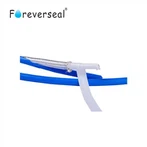
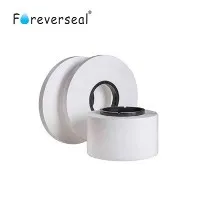
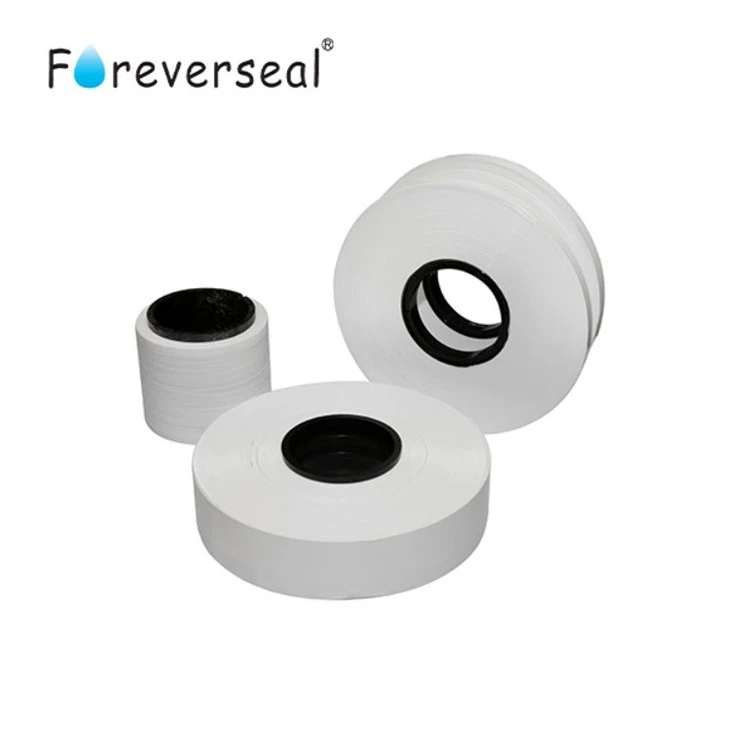
PTFE Cable Film
PTFE cable film offer a low coefficient of friction and high temperature resistance. The non-sticky and great electrical properties of PTFE cable film make it important in a wide variety of industries.
● High thermal, chemical, and solvent resistance.
● Excellent anti stick properties and low friction.
● Excellent electrical resistant properties.
Description
PTFE can be further processed into expanded PTFE (e-PTFE) materials by uniaxial or biaxial stretching, which can further reduce the dielectric constant. These materials have excellent volume and surface resistivity and are not affected by temperature before the glass transition temperature. They have low hygroscopicity and are minimally affected by humidity. The electrical properties of PTFE plastics do not change over time and are inert to almost all chemicals and solvents, even at high temperatures and high pressures, making them particularly suitable for data transmission cables that require low attenuation.
PTFE high-frequency cables come in many types depending on their structure and purpose, including semi-rigid, semi-flexible, corrugated, low-loss phase-stable cables, and test cables.
PTFE coaxial cables are usually composed of a center conductor, PTFE insulation, braided shield, and outer jacket. The center conductor is usually made of silver-plated copper or silver-plated copper-clad steel, while the braided shield is made of silver or tinned copper. The outer jacket can be made of materials such as FEP, PTFE, or polyethylene.
There are several processes involved in the production of PTFE coaxial cable, such as conductor preparation, jacket extrusion, insulation extrusion, braiding, and testing. Usually, the conductor is cleaned, cut to length, and then lightly plated with silver. The braided shield is then extruded onto the conductor after the insulation. Lastly, the cable's mechanical and electrical strengths are checked before the outer jacket is extruded over the braided shield.

Features of PTFE products
High chemical stability is a notable characteristic of the material, demonstrating resistance to strong acids including aqua regia, hydrofluoric acid, concentrated hydrochloric acid, nitric acid, fuming sulfuric acid, organic acids, strong alkalis, powerful oxidants, reducing agents, and a variety of organic solvents. This property makes it particularly suitable for applications involving high-purity chemicals.
The material also boasts a low friction coefficient, typically around 0.04, classifying it as an exceptional self-lubricating material. Importantly, the friction coefficient remains consistent regardless of temperature changes. Additionally, it exhibits excellent anti-stick performance, making it difficult for colloids and chemicals to adhere to the inner wall of the tube. This property enhances efficiency and reduces maintenance requirements in applications where these substances are commonly used.
Furthermore, the material possesses outstanding aging resistance, allowing for long-term outdoor use without significant degradation in quality or performance. This durability makes it a reliable choice for applications exposed to environmental factors.
In terms of electrical insulation performance, the material showcases excellent qualities. As a highly non-polar substance with commendable dielectric properties, it offers extremely high resistance and has a dielectric constant of about 2.0, which is the lowest among all electrical insulation materials. This feature makes it invaluable in electrical applications requiring high insulation.
Lastly, some variants of the tube material offer high transparency, enabling easy observation of internal fluids. This attribute is crucial in applications where monitoring fluid status is necessary, contributing to process control and safety.
- MATERIAL
· PTFE(Polytetrafluorethylene)
· Expanded, natural or white
· Thickness: 0.051mm - 0.254mm
· Width: 4mm -200mm
· Standard density: 0.5g/cm3-0.90g/cm3
- Technical Data:
|
Thickness |
0.0020" |
0.0030" |
0.0040" |
0.0050" |
0.0060" |
0.0080" |
0.0100" |
|
(0.051mm) |
(0.076mm) |
(0.102mm) |
(0.127mm) |
(0.152mm) |
(0.203mm) |
(0.254mm) |
|
|
Tolerance |
±0.00020" |
±0.00020" |
±0.00025" |
±0.00030" |
±0.00030" |
±0.0004" |
±0.00040" |
|
±0.005mm |
±0.005mm |
±0.006mm |
±0.0076mm |
±0.0076mm |
±0.010mm |
±0.010mm |
|
|
Width |
4 - 200mm |
||||||
|
Density |
0.5g/cm3-0.9g/cm3 |
||||||
|
Tensile Strength (minimum) |
12 MPa |
||||||
|
Elongation(minimum) |
50% |
||||||
|
Joint Free Lengths |
> 200m |
||||||


- Our certificate


- Product Application

FAQ
Q: How soon can I get samples to check your quality?
Q: Can you help us with the design?
Q: What about the lead time for mass production?
Q: What is your payment term?
Q: What is the shipping method?
placing orders.
Q: How do you make our business long-term and good relationship?
You Might Also Like