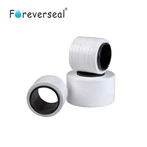
PTFE coating, also known as polytetrafluoroethylene coating, is widely used in various industrial fields due to its excellent high temperature resistance. Understanding the temperature resistance limit of PTFE coating is essential to ensure its safety and effectiveness in specific applications.
Temperature resistance limit overview
The temperature resistance limit of PTFE coating is generally considered to be 260°C (500°F). At this temperature, PTFE material can maintain its physical and chemical properties and is not easy to deform, melt or decompose. This feature makes PTFE an ideal choice for high temperature environments, such as chemical piping systems, high temperature seals and thermal conductivity devices.
Long-term use temperature
Although the temperature resistance limit of PTFE can reach 260°C, in actual applications, in order to ensure its long-term stability and safety, it is recommended that its continuous use temperature be controlled below 200°C. This is because long-term exposure to temperatures close to the temperature resistance limit may cause the performance of PTFE materials to gradually deteriorate, and even cause safety hazards.
Performance at extreme temperatures
At extremely low temperatures, PTFE coatings can maintain softness and elasticity without becoming brittle or losing their properties. This makes PTFE an ideal choice for cryogenic applications, such as liquid nitrogen storage and spacecraft components. In high temperature environments, PTFE coatings are also able to maintain their stability without decomposition or deformation.
Conclusion
In summary, the temperature limit of PTFE coating is 260°C, but in practical applications, in order to ensure its long-term stability and safety, it is recommended to control its continuous use temperature below 200°C. Understanding and complying with these temperature limits is essential to fully realize the advantages of PTFE coatings.