

Latest Products


Contact Us
- No.278, Qingxian Road, Linglong Street, Linan, Hangzhou, Zhejiang, China.
- fiona@foreverseal.com
- +8613396551886


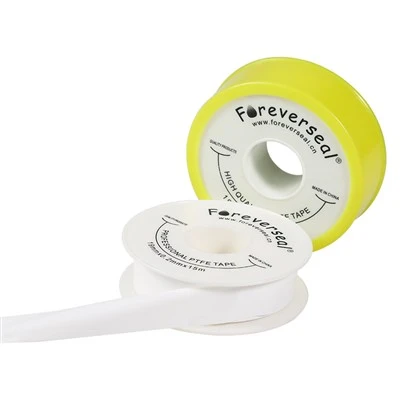
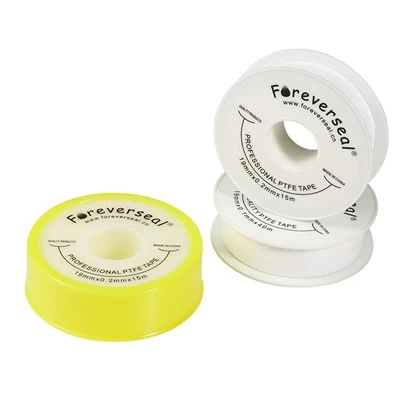
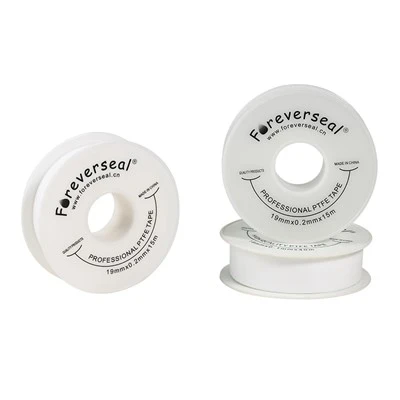
Ptfe Tape Application
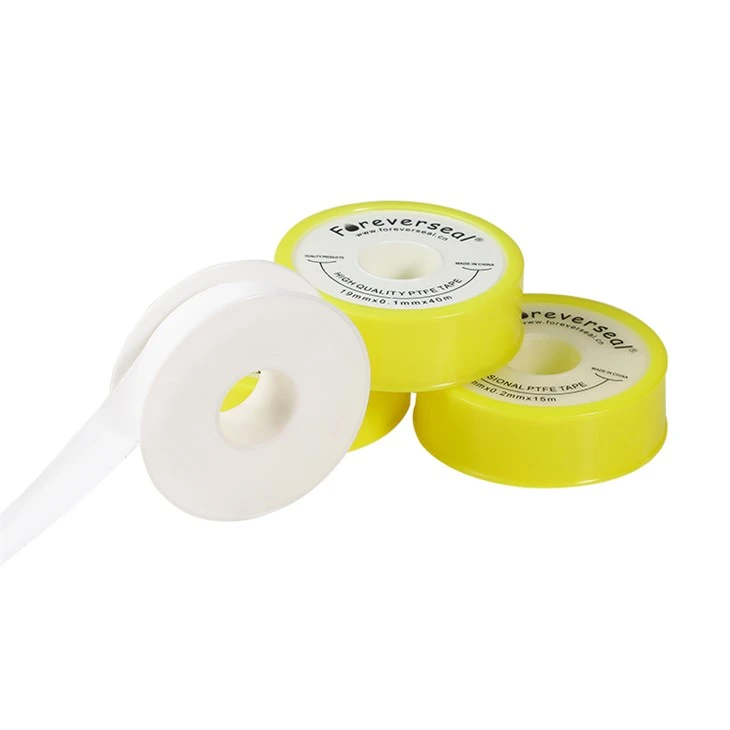
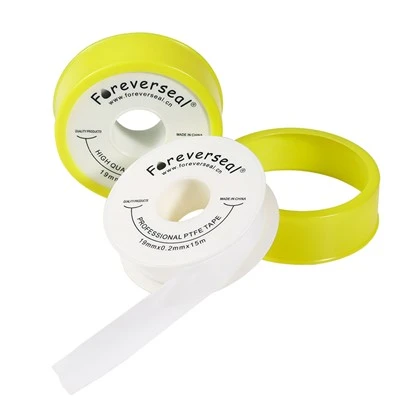
Size: 19mmx0.2mmx15mx0.68g/cm3
Spool OD/ID: 86mm OD, 25mm ID
Spool/Cover color: Orange/Blue
Tape color: White
MOQ: 20000 pcs
Description
What is Ptfe Tape Application
PTFE tape, also known as Teflon tape, has been widely used in various industries due to its unique properties. It is a popular sealing material that has excellent chemical resistance, high temperature resistance, and non-stick properties.
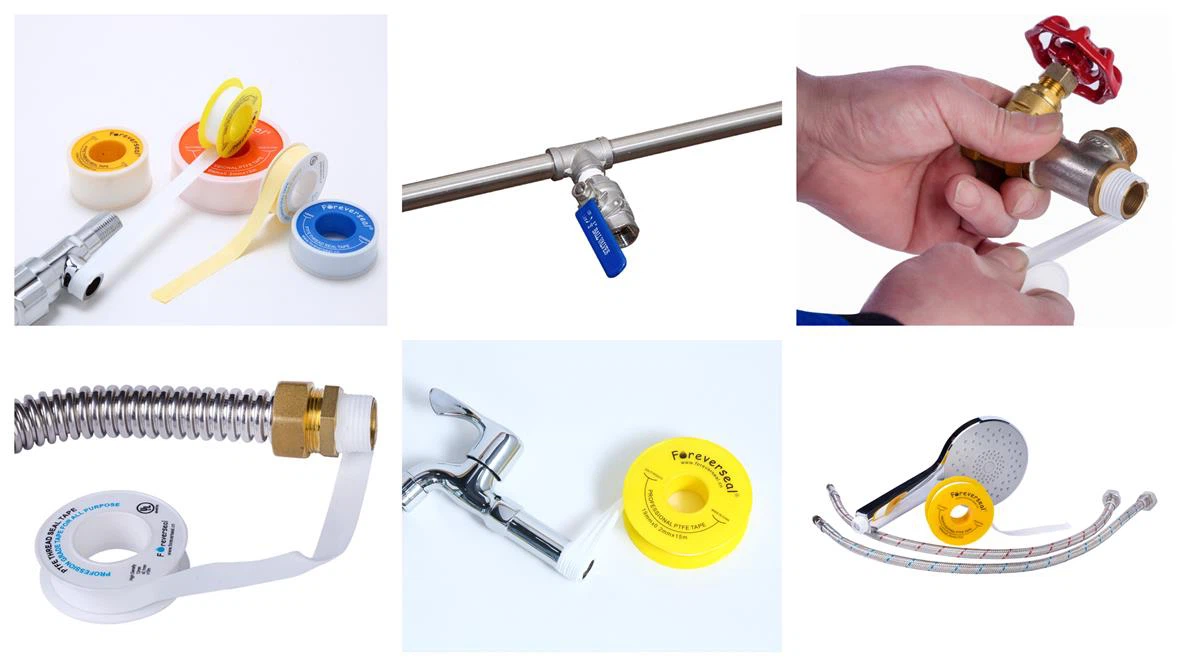
One of the main applications of PTFE tape is in plumbing. It is commonly used to seal pipe threads, preventing leaks and ensuring proper pipe connections. It is also used in the construction industry to seal joints around windows and doors, providing a tight barrier against air and moisture.
In the automotive industry, PTFE tape is used to seal hydraulic systems and brake fittings. Its resistance to chemicals and high temperatures makes it an ideal material for use in harsh operating conditions.
In the food industry, PTFE tape is often used as a non-stick coating for cooking surfaces and baking trays. Its unique properties allow for easy cleanup and prevent food from sticking to surfaces, ensuring high-quality, safe food production.
Furthermore, PTFE tape is widely used in the aerospace industry, where it is used to seal airplane fuel systems and hydraulic lines. Its high chemical resistance and temperature stability make it an excellent material for use in this critical industry.
Overall, PTFE tape is a versatile and reliable material that has a wide range of applications across many industries. Its unique properties make it an ideal choice for the most demanding of applications. Whether you're in need of a sealing solution for plumbing or looking for a non-stick surface in the kitchen, PTFE tape has got you covered!

PTFE's versatile performance properties including non-stick release, high temperature, water and chemical resistance, and dielectric strength enable PTFE tapes to be used in a variety of applications. These properties help to improve performance where physical characteristics are important.
Types Of Ptfe Tape Application
PTFE tape is of many types specified by its area of application. Water PTFE tape is used for residential water pipes, yellow for gas pipelines, and green for oxygen pipes. PTFE tape has exceptional chemical and physical properties.

Material of Ptfe Tape Application
The main material of PTFE tape is polytetrafluoroethylene (PTFE). Polytetrafluoroethylene has many unique properties, such as its extremely low friction coefficient, which enables PTFE tape to effectively reduce friction with other surfaces during use, thereby reducing wear and energy loss. It also has good chemical stability and can withstand the erosion of a variety of chemical substances, including strong acids, strong alkalis and other corrosive substances, which enables PTFE tape to maintain good performance in different chemical environments and can be widely used in equipment sealing and protection in various chemical-related fields. In addition, PTFE also has the characteristics of high temperature resistance and can maintain its physical and chemical properties stable at higher temperatures, which makes it possible to use PTFE tape in high temperature environments, such as in the sealing and insulation of some high-temperature equipment. In the production of some PTFE tapes, other ingredients are also added. For example, some PTFE-based sealing materials contain fillers, and mineral lubricants such as graphite or talc are added to the PTFE matrix as fillers. The addition of these fillers can further improve the performance of PTFE tape, such as improving its lubricity and enhancing its sealing effect.
Application of Ptfe Tape Application
In industrial sealing
In valve sealing, PTFE tape can be used to make valve stem seals. Because PTFE tape has good chemical stability and low friction coefficient, it can effectively prevent medium leakage during the frequent opening and closing of the valve, and ensure the smoothness of valve stem operation, reduce wear, and thus extend the service life of the valve.
In chemical equipment sealing, because the chemical production environment is often complex and there are many corrosive chemicals. PTFE tape can withstand the erosion of these chemicals, so it is widely used in pipeline interface sealing, reactor sealing and other parts of chemical equipment to ensure the safety and stability of the chemical production process and prevent the leakage of chemical raw materials or products.
Packaging field
In the process of heat sealing of plastic film, PTFE tape can be used as a working surface covering. For example, in the production process of plastic packaging of some food, medicine and other products, the heat sealing operation requires precise temperature control and good demolding performance. The high temperature resistance (up to 260°C and above) and excellent demolding surface characteristics of PTFE tape can ensure that the plastic film does not stick during the heat sealing process, making the heat sealing effect better and the packaging quality higher.
Dental field
There are special dental PTFE tapes, which may play a role of isolation and protection during dental treatment or related operations. For example, during the operation of certain dental instruments, it prevents the instruments from causing unnecessary damage to the surrounding tissues of the oral cavity, or plays an auxiliary fixation, isolation and other functions during the processing of dental materials, but detailed information about dental applications may vary due to different dental operations and specific product designs.
To apply PTFE tape, you can follow these steps:
Clean the pipe: Remove any dirt or dust from the pipe and connecting piece.
Determine the direction: Pay attention to the direction of the pipe's threading.
Line up the tape: Start the tape on the second line of the threading, one to two millimeters in from the start.
Wrap the tape: Wrap the tape clockwise, keeping it tight but not straining the threads. With each rotation, move the tape down so it overlaps half of the previous layer.
Complete the wrappings: Wrap the tape three to four full times, making sure it's flat against the surface.
Finish: Cut or rip the tape, then use your fingertips to smooth the edges against the pipe.
Tighten: Hand tighten the fitting, then use a wrench or two to give it a final turn.

- Specifications
|
Width |
19mm (3/4") |
|
Thickness |
0.2mm |
|
Length |
15m |
|
Density |
0.68g/cm3 |
|
Tape color |
White |
|
Spool |
86mm OD, 25mm ID |
|
Packing |
Option A: 10pcs/shrink,100pcs/box, 500pcs/ctn Option B: 10pcs/shrink,100pcs/box, 200pcs/ctn Option C: 10pcs/box, 250pcs/ctn (Packing cost A < B < C) Other customized packing allowed. |
|
MOQ |
20000 pcs |
|
Delivery time |
30-40 days after getting your prepayment |
- Technical Data:
|
Composition |
100% virgin PTFE |
|
Pressure Rating |
up to 3,000PSI |
|
Temp.Range |
-190C to +260C |
|
Tensile Strength |
8 N/mm2 |
|
Elongation |
Min 25% |
|
Storage |
Unlimited shelf life(less than 70F )/50% relative humidity out of direct sunlight |
|
Flammability |
Non-flammable |


- Our certificate


- Our Products VS Others

- Product Application
- Packing ways


- FAQS:
Q: Do you produce plastics spool and cover?
A: Yes, we have own injection molding machine.
Q: Do you pass ISO 9001?
A: Yes, we do
Q: What is thread tape used for?
A: Thread tape is used to seal the thread on plumbing pipes & fittings to stop them leaking. It also aids in preventing the thread seizing when being unscrewed.
Q: How is thread sealant tape applied?
A: Face the threaded male end of the fitting towards you and wrap the teflon tape in a clockwise direction. Start wrapping from the bottom and work your way up the threads (see below). Cover at least half the width of the tape each time you wrap it around the fitting. Continue wrapping until you reach the end of the pipe.
Q: What would be the primary application of PTFE tape?
A: PTFE is extensively used across various fields, from industrial applications to household kitchens. Its primary application as a thread sealant is in the piping industry, where it is used to seal piping joints and ducts.
Q: How do I process PTFE?
A: PTFE products are manufactured - by cold compression Moulding / Sintering Process, Isostatic Moulding / Sintering process, RAM Extrusion, Paste Extrusion, Hot Coining process, Skiving process, Calendaring process & Coating process & machined to get final component.
Q: How many times do you wrap PTFE tape?
A: This obviously renders the PTFE tape completely useless and highlights exactly why you should wrap it around the thread in a clockwise motion. When applying the tape clockwise, it's recommended that you wrap it around the thread three or four times.
Q: How many layers of Teflon tape to use?
A: To ensure a good seal, wrap the tape in a clockwise direction and cover the threads completely. You need to use only two or three wraps of tape; however, thinner tape may need four or five wraps.
Q: Will PTFE tape seal a leak?
A: Yes, PTFE tape (also known as Teflon tape or plumber's tape) can seal a leak, particularly when applied correctly to the threads of a pipe connection, acting as a preventative measure to fill gaps and create a tight seal against water, gas, or air leaks; however, it is most effective for minor leaks and should not be relied upon to fix major damage or poorly fitted joints.
Q: How many loops of PTFE tape?
A: is there a number of turns recommended on placing teflon on a pipe. You always want to wrap seal tape around threaded pipe fitting in a clockwise direction. In most cases for a new joint you should apply only two or three wraps of tape.
You Might Also Like


