


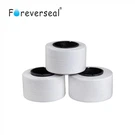


As a supplier of PTFE Film Roll, I've had the privilege of witnessing the remarkable properties and widespread applications of this material. PTFE (Polytetrafluoroethylene) film roll is renowned for its exceptional chemical resistance, low friction coefficient, high-temperature stability, and excellent electrical insulation properties. However, like any material, it also has its disadvantages. In this blog post, I will delve into the drawbacks of PTFE Film Roll to provide a comprehensive understanding for potential buyers.
High Cost
One of the most significant disadvantages of PTFE Film Roll is its high cost. The production of PTFE involves a complex and energy-intensive process, which drives up the manufacturing cost. Additionally, the raw materials used in PTFE production, such as fluorspar and hydrofluoric acid, are relatively expensive. As a result, the final price of PTFE Film Roll is significantly higher compared to other plastic films. This high cost can be a major deterrent for budget-conscious customers, especially those in industries where cost is a critical factor.
Difficult to Process
PTFE has a very high melting point (around 327°C) and a high viscosity in its molten state, which makes it difficult to process using traditional plastic processing methods. Injection molding, for example, is not suitable for PTFE due to its high viscosity and the tendency to form voids and bubbles during the molding process. Instead, PTFE is typically processed using methods such as compression molding, extrusion, and sintering, which require specialized equipment and expertise. These processing methods are more time-consuming and expensive, further adding to the overall cost of PTFE Film Roll.
Poor Adhesion
PTFE has a very low surface energy, which makes it difficult to bond to other materials. This poor adhesion can be a significant problem in applications where PTFE Film Roll needs to be attached to other components. For example, in electronic applications, PTFE Film Roll is often used as an insulation material, but it can be challenging to bond it to printed circuit boards or other electronic components. Specialized adhesives or surface treatments are usually required to improve the adhesion of PTFE Film Roll, which adds to the complexity and cost of the manufacturing process.


Environmental Concerns
The production and disposal of PTFE can have environmental implications. The production of PTFE involves the use of perfluorooctanoic acid (PFOA), a chemical that has been linked to various health and environmental issues. Although the use of PFOA has been phased out in many countries, some PTFE products may still contain trace amounts of this chemical. Additionally, PTFE is a non-biodegradable material, which means that it can persist in the environment for a long time. When PTFE is incinerated, it can release toxic gases, such as hydrogen fluoride, which can be harmful to human health and the environment.
Limited Mechanical Strength
Compared to some other engineering plastics, PTFE has relatively low mechanical strength. It is prone to creep, which is the gradual deformation of a material under a constant load over time. This can be a problem in applications where the PTFE Film Roll is subjected to high stress or pressure. For example, in mechanical applications, PTFE Film Roll may not be suitable for use in high-load or high-stress environments.
Difficulty in Recycling
PTFE is a difficult material to recycle due to its high melting point and chemical stability. Most recycling facilities are not equipped to handle PTFE, and the recycling process is often complex and expensive. As a result, a large amount of PTFE waste ends up in landfills, which can have a negative impact on the environment.
Applications and Mitigation
Despite these disadvantages, PTFE Film Roll still has many valuable applications. It is widely used in industries such as electronics, automotive, aerospace, and chemical processing, where its unique properties are highly sought after. For example, in the electronics industry, PTFE Film For Insulation And Cabling is used to provide excellent electrical insulation for cables and wires. In the automotive industry, PTFE Film Roll is used in gaskets and seals due to its chemical resistance and low friction coefficient.
To mitigate the disadvantages of PTFE Film Roll, manufacturers can take several steps. For example, they can develop new processing techniques to reduce the cost and improve the efficiency of PTFE production. They can also invest in research and development to find alternative materials or improve the properties of PTFE. Additionally, manufacturers can implement proper waste management practices to reduce the environmental impact of PTFE production and disposal.
Conclusion
In conclusion, while PTFE Film Roll has many excellent properties, it also has several disadvantages that need to be considered. The high cost, difficult processing, poor adhesion, environmental concerns, limited mechanical strength, and difficulty in recycling are all factors that can affect the suitability of PTFE Film Roll for certain applications. However, with proper planning and mitigation strategies, these disadvantages can be minimized, and the benefits of PTFE Film Roll can be fully realized.
If you are interested in learning more about our PTFE Film Roll products or have any questions regarding their applications, please feel free to contact us for a detailed discussion. We are committed to providing high-quality products and excellent customer service to meet your specific needs.
References
- "Polytetrafluoroethylene (PTFE): Properties, Applications, and Processing." Plastics Technology.
- "Environmental and Health Impacts of PTFE Production." Environmental Science & Technology.
- "PTFE Film: A Comprehensive Guide." Plastics News.