


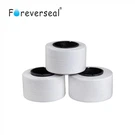


Porous PTFE (Polytetrafluoroethylene) film is a remarkable material with a wide range of applications, from filtration to electronics and medical devices. As a supplier of porous PTFE film, I am often asked about the raw materials needed to produce this unique product. In this blog post, I will delve into the key raw materials and their roles in the production process.
Polytetrafluoroethylene Resin
At the heart of porous PTFE film production is the PTFE resin itself. PTFE is a synthetic fluoropolymer of tetrafluoroethylene, known for its exceptional chemical resistance, low friction coefficient, and high thermal stability. The quality of the PTFE resin is crucial as it directly impacts the properties of the final porous film.
High - quality PTFE resin is typically in the form of fine powder. The molecular weight of the resin can vary, and different molecular weights are selected based on the desired characteristics of the porous film. For example, higher molecular weight PTFE resins can result in films with better mechanical strength, while lower molecular weight resins may be used for applications where flexibility is more important.


Lubricants
Lubricants play a vital role in the production of porous PTFE film. They are added to the PTFE resin to facilitate the extrusion and stretching processes. Commonly used lubricants include hydrocarbon oils and waxes.
The lubricant helps to reduce the friction between the PTFE particles during processing, allowing the resin to flow more easily through the extrusion die. This is essential for achieving a uniform thickness and structure in the film. After the extrusion process, the lubricant is removed through a heating step, leaving behind a porous structure in the PTFE film.
Additives
In some cases, additives are incorporated into the PTFE resin to enhance specific properties of the porous film. These additives can include fillers, stabilizers, and colorants.
- Fillers: Fillers such as glass fibers, carbon fibers, or silica can be added to improve the mechanical strength and dimensional stability of the porous PTFE film. For example, glass fibers can increase the tensile strength and stiffness of the film, making it more suitable for applications where high mechanical performance is required.
- Stabilizers: Stabilizers are used to prevent the degradation of the PTFE resin during processing and use. They can protect the film from oxidation, UV radiation, and other environmental factors. This helps to extend the lifespan of the porous PTFE film in various applications.
- Colorants: Colorants are added to give the porous PTFE film a specific color. This can be useful for aesthetic purposes or for applications where color - coding is required.
The Production Process and the Role of Raw Materials
The production of porous PTFE film typically involves several steps, including mixing, extrusion, stretching, and heat treatment.
- Mixing: The PTFE resin, lubricant, and any additives are thoroughly mixed to ensure a homogeneous blend. This step is crucial for achieving consistent properties throughout the film.
- Extrusion: The mixed material is then extruded through a die to form a continuous sheet. The lubricant helps the material flow smoothly through the die, resulting in a uniform thickness of the film.
- Stretching: After extrusion, the film is stretched in one or two directions. This stretching process creates the porous structure in the PTFE film. The degree of stretching can be controlled to adjust the pore size and porosity of the film.
- Heat Treatment: Finally, the stretched film is heat - treated to remove the lubricant and to stabilize the porous structure. This step also helps to improve the mechanical properties of the film.
Applications of Porous PTFE Film and Our Product Offerings
Porous PTFE film has a wide range of applications, thanks to its unique properties. In the electronics industry, it is used for high - temperature cable insulation. Our PTFE Film For High Temperature Cable is specifically designed to meet the demanding requirements of high - temperature environments, providing excellent electrical insulation and mechanical protection.
In the cable industry, Low Density PTFE Cable Film is used for cable wrapping. It offers low dielectric constant and low loss, making it ideal for high - frequency cables. Our PTFE Cable Wrapping Tape is a popular choice for cable manufacturers due to its high flexibility and excellent wrapping performance.
Contact Us for Procurement
If you are interested in purchasing porous PTFE film for your specific application, we are here to help. Our team of experts can provide you with detailed information about our products, including specifications, pricing, and delivery options. We are committed to providing high - quality porous PTFE film that meets your exact requirements.
Whether you need a small quantity for research and development or a large - scale production order, we can accommodate your needs. Contact us today to start a discussion about your procurement requirements and to explore how our porous PTFE film can benefit your business.
References
- Billmeyer, F. W. (1984). Textbook of Polymer Science. Wiley - Interscience.
- Grootaert, W. H., & Mark, J. E. (1996). Encyclopedia of Polymer Science and Technology. John Wiley & Sons.
- Ratner, B. D., Hoffman, A. S., Schoen, F. J., & Lemons, J. E. (2004). Biomaterials Science: An Introduction to Materials in Medicine. Elsevier.