


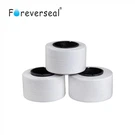


Tribological properties refer to the study of friction, wear, and lubrication of interacting surfaces in relative motion. When it comes to thin PTFE (Polytetrafluoroethylene) films, understanding their tribological properties is crucial for a wide range of applications. As a supplier of thin PTFE films, I have witnessed firsthand the unique characteristics that make PTFE films stand out in various industries.
Friction Characteristics of Thin PTFE Films
One of the most remarkable features of PTFE is its extremely low coefficient of friction. This property makes thin PTFE films ideal for applications where reduced friction is essential. For instance, in mechanical systems such as bearings and sliding components, the low friction of PTFE films helps to minimize energy loss and wear. The coefficient of friction of PTFE is typically in the range of 0.04 - 0.1, which is significantly lower compared to many other materials.
The low friction of PTFE films can be attributed to its molecular structure. PTFE has a smooth and non - reactive surface, which reduces the adhesion between the film and the contacting surface. Additionally, the fluorine atoms on the surface of PTFE create a low - energy surface, further contributing to the low friction. This low - friction property allows PTFE films to operate smoothly even under high loads and speeds, making them suitable for high - performance applications.
Wear Resistance of Thin PTFE Films
Wear resistance is another important tribological property of thin PTFE films. PTFE has excellent wear resistance due to its high molecular weight and strong carbon - fluorine bonds. These bonds provide a stable and durable structure that can withstand the abrasive forces during sliding or rubbing.
In applications where there is continuous contact and movement, such as in conveyor belts or seals, the wear resistance of PTFE films ensures a long service life. The ability of PTFE to resist wear also helps to maintain the integrity of the film and the performance of the overall system. However, it's important to note that the wear resistance of PTFE can be affected by factors such as the load, sliding speed, and the nature of the contacting surface.
Lubrication and Self - Lubricating Properties
Thin PTFE films possess self - lubricating properties, which is a significant advantage in many applications. Self - lubrication means that the film can reduce friction and wear without the need for external lubricants. This is particularly useful in environments where lubricants are difficult to apply or where they may contaminate the system.
The self - lubricating property of PTFE films is due to the transfer of a thin layer of PTFE onto the contacting surface during sliding. This transferred layer acts as a lubricant, reducing friction and wear. In addition, PTFE films can operate in a wide range of temperatures, from cryogenic to high - temperature environments, while still maintaining their self - lubricating properties.


Applications of Thin PTFE Films Based on Tribological Properties
The unique tribological properties of thin PTFE films make them suitable for a variety of applications. In the automotive industry, PTFE films are used in engine components, such as piston rings and valve seals, to reduce friction and improve fuel efficiency. In the aerospace industry, PTFE films are used in bearings and sliding components to ensure smooth operation under extreme conditions.
In the electronics industry, PTFE films are used as insulation materials and in connectors. The low friction and high wear resistance of PTFE films help to protect the electronic components from damage and ensure reliable performance. Moreover, in the medical field, PTFE films are used in surgical instruments and implants due to their biocompatibility and low friction properties.
Our Product Range
As a supplier of thin PTFE films, we offer a wide range of products to meet different customer needs. Our Low Density PTFE Cable Tape is designed for cable insulation applications. It has excellent electrical properties and low friction, which helps to protect the cables from damage and ensure efficient signal transmission.
Our Expanded PTFE Cable Wrapping Tape is another popular product. It is highly flexible and can be easily wrapped around cables. The expanded structure of the tape provides good insulation and protection, while the low friction property allows for easy installation.
We also offer Unsintered Ptfe, which has unique properties suitable for specific applications. Unsintered PTFE can be easily formed into different shapes, making it ideal for custom - made products.
Contact Us for Procurement
If you are interested in our thin PTFE films and want to learn more about their tribological properties or place an order, we encourage you to contact us. Our team of experts is ready to provide you with detailed information and support. Whether you are looking for a solution for a specific application or need a large - scale supply, we can meet your requirements.
References
- Bhushan, B. (2013). Handbook of Tribology: Materials, Coatings, and Surface Treatments. Wiley.
- Sawyer, W. G., & Novotny, P. (2012). Friction and Wear of Materials. CRC Press.
- Wang, Q., & Bhushan, B. (2007). Nanotribology and Nanomechanics of PTFE and Its Composites. Journal of Tribology, 129(4), 767 - 777.