

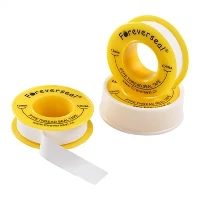


If you've ever worked on a plumbing repair, HVAC installation, or industrial piping project, chances are you've reached for a roll of PTFE tape-also often called Teflon tape-to create leak-proof seals on threaded connections. But if you've ever taken a closer look at the product, you might have wondered: What is the density of PTFE tape, and why does it even matter? As a PTFE tape supplier, I get this question all the time, and it's not just a trivial detail-density directly impacts how well the tape works, how long it lasts, and whether it's suitable for your specific application. Let's break this down simply, without the jargon, so you can make the best choice for your next project.
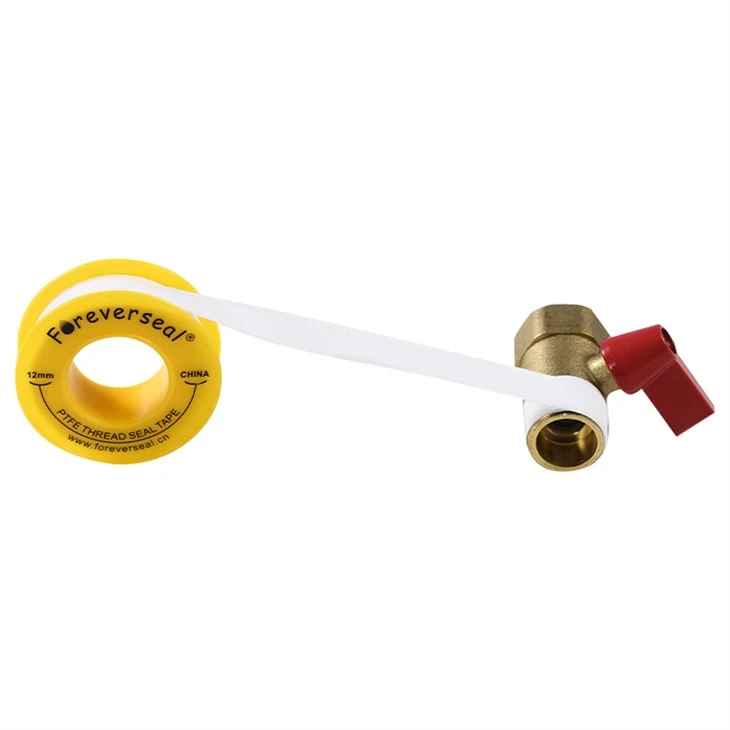
First, let's start with the basics: What is PTFE tape? Polytetrafluoroethylene (PTFE) is a synthetic fluoropolymer famous for its non-stick, heat-resistant, and chemical-inert properties. It's the same material used in Teflon cookware, but when processed into thin, flexible tape, it becomes a go-to sealing solution for threaded pipes, fittings, and valves. The tape is usually applied in a few thin layers around male threads before assembly, where it compresses to fill tiny gaps between the threads and prevent water, gas, or other fluids from leaking out.
Now, density is a measure of how much mass is packed into a given volume. For PTFE tape, density is typically measured in grams per cubic centimeter (g/cm³), and it's a critical specification because it determines the tape's strength, flexibility, sealing ability, and even its resistance to chemicals and high temperatures. Not all PTFE tape is created equal, which is why you'll find different density grades on the market-and why choosing the right one is key.
Let's talk about the standard density ranges you'll encounter.
Most general-purpose white PTFE tape, the kind you'd pick up for home plumbing repairs, has a density between 0.3 and 1.0 g/cm³. This is the baseline for most off-the-shelf rolls, designed for light to medium-duty jobs like sealing water pipes, natural gas lines, or low-pressure air fittings. But density isn't the only variable here-how the tape is manufactured also plays a big role in its performance. Some rolls are stretched during production, which can thin the material slightly and lower the density a bit, though not drastically.
Then there's high-density PTFE tape, which has a higher density, usually between 0.8 to 1.0 g/cm³. This is the tape you want for more demanding applications. Higher density means the tape is thicker, more durable, and compresses more tightly into thread gaps, creating a better, more long-lasting seal. It also tends to have better chemical resistance, making it suitable for harsher environments or corrosive fluids. For example, if you're working with oxygen lines, industrial chemicals, or high-pressure gas systems, high-density tape is non-negotiable.
Wait a second-why does density matter for your project specifically? Let's use real-world examples to make this concrete. If you're a DIYer fixing a leaky bathroom sink, the standard white tape with a density around 0.4 g/cm³ will work perfectly fine. It's flexible, easy to apply, and creates a seal that will hold up under normal residential water pressure. You can pick up a roll of this everyday option as White Teflon Tape, and it's the most widely used PTFE tape for general plumbing jobs. But if you're a HVAC technician installing a commercial refrigeration system, or a industrial maintenance worker connecting chemical lines, you'll need a tape that can handle higher pressures and more aggressive chemicals. That's where a higher-density tape comes in.
One common misconception is that thicker tape automatically means higher density, but that's not always the case. Thickness is measured in mils (one mil is 0.001 inches), so a standard tape might be 2 to 3 mils thick, while high-density tape could be 4 to 5 mils thick. But density is about mass per volume, so a thin, tightly compressed tape could have a higher density than a thicker, more loosely stretched one. For example, some 19mm Teflon Tape rolls are designed specifically for high-temperature applications, and their density is engineered to withstand extreme heat without breaking down-an important feature for industrial furnaces or process piping where temperatures can exceed 500°F.
Another key point: not all PTFE tape uses the same base material. Some lower-quality tapes are made from recycled PTFE, which can have inconsistent densities and impurities that weaken the seal over time. That's why working with a reputable supplier matters-our PTFE tapes are made from virgin PTFE resin, so their density is consistent across every roll, ensuring reliable performance every time you use them. You'll never have to worry about a thin spot or uneven density leading to a leak.
Let's talk about a specific use case that highlights the importance of density: oxygen service. Oxygen systems require tapes that are non-flammable and can resist ignition when in contact with pure oxygen under pressure. The standard density for Green High Density PTFE Thread Tape For Oxygen is around 1.0 g/cm³, which meets strict safety standards for medical and industrial oxygen applications. The higher density ensures the tape won't break down or release particles that could contaminate oxygen lines, and its chemical inertness means it won't react with pure oxygen, which is critical for preventing dangerous fires or explosions.
You might also be wondering about other forms of PTFE sealing products, like thread sealing cord, which is a thicker, braided alternative to tape. While its density is a bit lower than standard tape (around 0.35g/cm³), it offers a different sealing solution for larger threads or fittings where tape might not be as effective. A 50M Sealing Cord is often used for heavy-duty plumbing or industrial jobs where a more robust, flexible seal is needed, and its density is tailored to compress evenly under high torque without cracking.
Now, how do you test the density of PTFE tape if you're not sure? Well, you don't need any fancy lab equipment-for most practical purposes, you can look at the product specifications provided by the supplier. Any reputable PTFE tape manufacturer will list the density on their product data sheet, along with thickness, width, and application suitability. If you're comparing two rolls of tape with the same width and length, the heavier roll will have a higher density, since it has more mass in the same volume. That's a quick and easy way to spot the difference between a standard and high-density tape when you're holding it in your hand.
It's also worth noting that density affects how the tape behaves during application. Lower-density tapes are softer and more pliable, making them easier to wrap around fine threads, which is why they're popular for delicate plumbing jobs like fitting connections on faucets or shower heads. Higher-density tapes are stiffer, so they hold their shape better when wrapped around coarse, heavy-duty threads, creating a tighter, more consistent seal that won't tear or unravel during installation.
As a supplier, I've seen firsthand how choosing the wrong density of PTFE tape can lead to problems: leaks that show up months later, tape that breaks during installation, or seals that fail under pressure. That's why we work closely with our customers to help them select the right tape for their specific needs. Whether you need a lightweight Ptfe White Tape for residential plumbing, a high-temperature 19mm Teflon Tape for industrial lines, or a Green High Density PTFE Thread Tape For Oxygen for medical applications, we have options with consistent, verified densities to meet your requirements.
We also carry a range of ancillary products, like 50M Sealing Cord, for jobs where tape isn't the best fit. All of our products are manufactured in ISO-certified facilities, so you can trust that their density and quality are consistent roll after roll.
If you're working on a project and aren't sure which PTFE tape density is right for you, or if you have questions about our products and how they can fit into your workflow, we'd love to hear from you. Our team has years of experience in the piping and sealing industry, and we're always happy to help you find the perfect solution for your needs.

References
- "Polytetrafluoroethylene (PTFE) Properties and Applications." DuPont Technical Data Sheets.
- "ASTM D1457 - Standard Specification for Polytetrafluoroethylene (PTFE) Molding and Extrusion Materials." ASTM International.
- "PTFE Tapes: Density, Manufacturing, and Performance Characteristics." Industrial Plastics Technology Journal, Vol. 28, No. 3, 2022.
- "Safety Standards for PTFE Tapes in Oxygen Service." Compressed Gas Association (CGA) Pamphlet G-4.1.