



Hey there! As a supplier of PTFE wrapping film, I often get asked whether our product can be used for electrical insulation. Well, let's dive right into it and find out if PTFE wrapping film is a good fit for electrical insulation needs.


First off, let's talk a bit about what PTFE is. PTFE, or polytetrafluoroethylene, is a synthetic fluoropolymer of tetrafluoroethylene. It's well - known for its non - stick properties, high chemical resistance, and low friction coefficient. But when it comes to electrical insulation, these aren't the only things we're interested in.
One of the key factors for electrical insulation is the dielectric strength. Dielectric strength refers to the maximum electric field that a material can withstand without breaking down and allowing current to flow through it. PTFE has an excellent dielectric strength. It can handle high voltages without conducting electricity, which makes it a great candidate for electrical insulation applications.
Another important aspect is the electrical resistivity. PTFE has a very high electrical resistivity, which means it resists the flow of electric current. This property is crucial for preventing short - circuits and ensuring the safety and proper functioning of electrical systems.
The low dielectric constant of PTFE is also beneficial. A low dielectric constant reduces the capacitance in electrical circuits. Capacitance can cause energy losses and signal interference, so a material with a low dielectric constant helps to maintain the integrity of electrical signals.
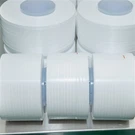
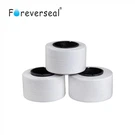
Now, let's take a look at our specific PTFE wrapping film products. We offer Colored Unsinerted Ptfe Tape For Cable Jacket. This tape is designed to be used as a cable jacket. It provides a protective layer that not only insulates the cable but also offers some mechanical protection. The colored feature can be useful for identification purposes in complex electrical systems.
Our PTFE Film For Insulation And Cabling is another great option. It's specifically engineered for insulation and cabling applications. The film is thin yet strong, and it can be easily wrapped around wires and cables to provide a reliable insulation layer.
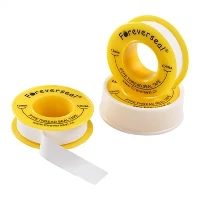
The Unsintered PTFE Wrapping Film has its own unique properties. Unsintered PTFE can be more flexible in some cases, which is useful when you need to wrap it around irregularly shaped objects. It also has good conformability, meaning it can closely follow the shape of the item it's wrapping, providing a tight and effective insulation layer.
However, like any material, PTFE wrapping film also has some limitations. One of the main drawbacks is its relatively high cost compared to some other insulation materials. But when you consider the long - term benefits, such as its durability and excellent insulation properties, the investment can be well worth it.
Another thing to note is that PTFE can be damaged by sharp objects. So, when using it for electrical insulation, you need to make sure that the environment is free from sharp edges or objects that could puncture the film.
In some high - temperature applications, although PTFE has a relatively high melting point, extreme heat can still affect its performance. So, you need to carefully consider the temperature range of your electrical system before using PTFE wrapping film.
Overall, PTFE wrapping film can definitely be used for electrical insulation. It offers a range of benefits such as high dielectric strength, high electrical resistivity, and a low dielectric constant. Our products are designed to meet the specific needs of electrical insulation and cabling applications.
If you're in the market for a reliable electrical insulation solution, our PTFE wrapping film could be the answer. Whether you're working on a small DIY electrical project or a large - scale industrial installation, we have the right product for you. We're always here to help you choose the best PTFE wrapping film for your needs. So, don't hesitate to get in touch with us to discuss your requirements and start a procurement process.
References:
- General knowledge of PTFE properties from materials science textbooks
- In - house research and development data on PTFE wrapping film performance for electrical insulation