

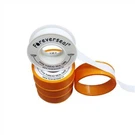


As a seasoned supplier of thin PTFE film, I've witnessed firsthand the remarkable properties that make this material a staple in various industries. One of the most outstanding features of thin PTFE film is its exceptional resistance to oxidation. In this blog post, I'll delve into the science behind how thin PTFE film resists oxidation, explore its applications, and discuss why it's a top choice for many demanding environments.
The Chemical Structure of PTFE: A Key to Oxidation Resistance
To understand how thin PTFE film resists oxidation, we must first look at its chemical structure. PTFE, or polytetrafluoroethylene, is a synthetic fluoropolymer of tetrafluoroethylene. Its molecular structure consists of a carbon backbone with fluorine atoms bonded to it. The carbon - fluorine (C - F) bond is one of the strongest single bonds in organic chemistry, with a bond energy of approximately 485 kJ/mol.
This strong C - F bond plays a crucial role in oxidation resistance. Oxidation typically involves the reaction of a substance with oxygen, often resulting in the breaking of chemical bonds and the formation of new compounds. However, the high bond energy of the C - F bond makes it extremely difficult for oxygen molecules to break these bonds and initiate oxidation reactions.
In addition to the strong C - F bond, the fluorine atoms in PTFE form a protective sheath around the carbon backbone. This sheath shields the carbon atoms from contact with oxygen and other reactive species. The fluorine atoms are highly electronegative, which means they attract electrons towards themselves. This creates a negative charge around the carbon backbone, repelling other negatively charged species such as oxygen radicals.
Surface Properties and Oxidation Resistance
The surface properties of thin PTFE film also contribute to its oxidation resistance. PTFE has a very low surface energy, which means it has poor wetting properties. When exposed to oxygen or other oxidizing agents, these substances have difficulty adhering to the surface of the PTFE film. As a result, the contact between the oxidizing agents and the PTFE material is minimized, reducing the likelihood of oxidation reactions.
Furthermore, the smooth surface of thin PTFE film prevents the accumulation of contaminants. Contaminants can act as catalysts for oxidation reactions, accelerating the degradation of the material. Since PTFE is non - sticky and has a self - cleaning surface, it is less likely to accumulate these contaminants, thereby maintaining its oxidation resistance over time.


Applications in Oxidation - Prone Environments
The oxidation resistance of thin PTFE film makes it suitable for a wide range of applications in environments where oxidation is a concern.
Electrical and Electronics Industry
In the electrical and electronics industry, thin PTFE film is used in high - temperature cables. PTFE Film For High Temperature Cable provides excellent insulation properties and can withstand high temperatures without oxidizing. This is crucial for cables used in aerospace, automotive, and industrial applications, where reliability and long - term performance are essential.
Chemical Processing
In chemical processing plants, thin PTFE film is used as a lining for pipes, tanks, and reactors. It can resist the corrosive effects of various chemicals, including strong oxidizing agents such as nitric acid and hydrogen peroxide. The oxidation resistance of PTFE ensures that the lining remains intact and does not contaminate the chemicals being processed.
Cable Shielding
Ptfe Shielding Tape For Cables is another important application. Cables are often exposed to harsh environmental conditions, including oxygen, moisture, and chemicals. The oxidation - resistant PTFE shielding tape protects the cables from damage, ensuring their proper functioning and extending their service life.
Insulation Wrapping
White Unsintered Foam PTFE Insulation Wrapping Tape is used in various insulation applications. Its oxidation resistance makes it suitable for use in high - temperature and high - humidity environments, where other insulation materials may degrade over time.
Comparing PTFE with Other Materials
When compared to other materials, thin PTFE film stands out for its superior oxidation resistance. For example, traditional polymers such as polyethylene and polypropylene are more susceptible to oxidation. These polymers have weaker carbon - hydrogen (C - H) bonds, which are more easily broken by oxygen molecules. As a result, they may degrade rapidly in the presence of oxygen, especially at high temperatures.
Metals, on the other hand, are also prone to oxidation. Iron, for instance, rusts when exposed to oxygen and moisture. While some metals can be protected with coatings, these coatings may wear off over time, leaving the metal vulnerable to oxidation. In contrast, thin PTFE film provides long - lasting oxidation resistance without the need for additional protective coatings.
Maintaining Oxidation Resistance
To ensure the long - term oxidation resistance of thin PTFE film, proper handling and storage are essential. PTFE film should be stored in a cool, dry place away from direct sunlight and sources of heat. Exposure to high temperatures can cause the PTFE to degrade, although it has a relatively high melting point (around 327°C).
During installation and use, care should be taken to avoid scratching or damaging the surface of the PTFE film. A damaged surface can expose the underlying material to oxygen and other reactive species, increasing the risk of oxidation.
Conclusion
The oxidation resistance of thin PTFE film is a result of its unique chemical structure, surface properties, and physical characteristics. The strong C - F bond, the protective fluorine sheath, and the low surface energy all contribute to its ability to resist oxidation. This makes thin PTFE film an ideal choice for applications in oxidation - prone environments, such as electrical and electronics, chemical processing, cable shielding, and insulation.
If you're looking for a reliable thin PTFE film supplier for your specific application, we're here to help. Our high - quality thin PTFE film products offer exceptional oxidation resistance and performance. Contact us to discuss your requirements and explore how our products can meet your needs.
References
- Billmeyer, F. W. (1984). Textbook of Polymer Science. Wiley - Interscience.
- Brandrup, J., & Immergut, E. H. (1989). Polymer Handbook. Wiley - Interscience.
- Otera, J. (2000). Modern Fluoroorganic Chemistry: Synthesis, Reactivity, Applications. Wiley - VCH.