



Hey there! As a supplier of HD PTFE Film, I often get asked about the thermal conductivity of this awesome material. So, in this blog, I'm gonna break it all down for you.
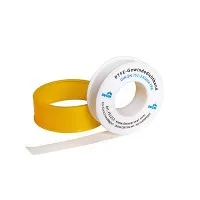
First things first, let's talk a bit about HD PTFE Film. HD stands for High - Density, and PTFE is Polytetrafluoroethylene. It's a type of fluoropolymer known for its outstanding chemical resistance, low friction, and excellent electrical insulation properties. Our HD PTFE Film has a bunch of applications, from PTFE Wrapping Film used in packaging to Wire PTFE for electrical insulation and Unsintered PTFE Film For Wire.
Now, let's dive into thermal conductivity. Thermal conductivity is a measure of a material's ability to conduct heat. It's usually denoted by the symbol 'k' and is measured in watts per meter - kelvin (W/(m·K)). A high thermal conductivity value means the material can transfer heat quickly, while a low value indicates that the material is a poor conductor of heat, or in other words, a good insulator.
The thermal conductivity of HD PTFE Film is relatively low. Typically, it ranges from about 0.25 to 0.35 W/(m·K). This low thermal conductivity makes HD PTFE Film a great choice for applications where heat insulation is required. For example, in electronic devices, it can be used to prevent the transfer of heat from one component to another, protecting sensitive parts from overheating.


One of the reasons for the low thermal conductivity of HD PTFE Film is its molecular structure. PTFE has a long - chain molecular structure with strong carbon - fluorine bonds. These bonds restrict the movement of heat - carrying phonons (quantized lattice vibrations). The large fluorine atoms also create a sort of'steric hindrance,' which further slows down the transfer of heat through the material.
Another factor is the high crystallinity of HD PTFE Film. The crystalline regions in the film are more ordered compared to the amorphous regions. In the crystalline parts, the molecules are arranged in a regular pattern, which can impede the flow of heat. However, the amorphous regions, where the molecules are more randomly arranged, do allow some degree of heat transfer.
Now, let's look at how this low thermal conductivity benefits different applications. In the case of PTFE Wrapping Film, it can help keep the contents of the package isolated from external temperature changes. If you're wrapping a food item or a sensitive electronic component, the low thermal conductivity of the film will prevent heat from getting in or out, maintaining the optimal temperature for the item inside.
For Wire PTFE, the low thermal conductivity is crucial for electrical insulation. When an electric current passes through a wire, it generates heat. If the wire's insulation material has a high thermal conductivity, the heat can escape into the surrounding environment, which might cause problems for nearby components. With HD PTFE Film, the low thermal conductivity helps keep the heat within the wire and its immediate vicinity, preventing any potential damage to other parts of the electrical system.
Similarly, Unsintered PTFE Film For Wire benefits from this property as well. Unsintered PTFE has a unique structure that can be further modified during the manufacturing process. The low thermal conductivity of this film ensures that it provides reliable insulation even under changing temperature conditions.
However, it's important to note that the thermal conductivity of HD PTFE Film can be affected by several factors. Temperature is one of the key factors. As the temperature increases, the molecular vibrations in the PTFE film become more intense. This can lead to a slight increase in thermal conductivity, but overall, it still remains relatively low compared to many other materials.
The thickness of the film also plays a role. Thicker films generally have a lower effective thermal conductivity because heat has to travel through a greater distance. But if the film is too thick, it might not be suitable for some applications where flexibility and thinness are required.
The degree of orientation of the PTFE molecules in the film can also influence thermal conductivity. If the molecules are highly oriented in a particular direction, heat transfer might be more efficient along that direction compared to others.
In some cases, you might want to enhance the thermal conductivity of HD PTFE Film. This can be achieved by adding fillers to the film. For example, adding materials like carbon nanotubes or metal oxides can increase the number of heat - conducting pathways within the film, thereby increasing its thermal conductivity. But this also needs to be balanced with other properties of the film, such as its electrical insulation and chemical resistance.
So, whether you're in the packaging industry, electronics manufacturing, or any other field that requires a material with good thermal insulation properties, our HD PTFE Film could be a great option for you. Its low thermal conductivity, combined with its other excellent properties, makes it a versatile and reliable choice.
If you're interested in learning more about our HD PTFE Film or have any questions regarding its applications, thermal conductivity, or other properties, don't hesitate to reach out. We're here to help you find the best solution for your specific needs. Let's have a chat and see how our HD PTFE Film can fit into your projects. Start the procurement process and let's get the ball rolling!
References:
- "Introduction to Polymers" by Andrew Peacock
- "Handbook of Materials Science and Technology"