

Latest Products


Contact Us
- No.278, Qingxian Road, Linglong Street, Linan, Hangzhou, Zhejiang, China.
- fiona@foreverseal.com
- +8613396551886


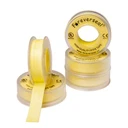
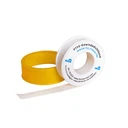
Pipe Thread Sealing Cord For Metal Pipes
Composition: Polyamide thread with inert proprietary paste
Appearance : White color, coated wet cord
Length: 150M
Packing: 20pcs/box, 100pcs/ctn
Description
Composition: Polyamide thread with inert proprietary paste
Appearance : White color, coated wet cord
Pipe thread sealing cord for metal pipes is a new product designed for use on metal pipes and fittings. It instantly seals domestic and industrial pipe systems during assembly. The product is supplied in containers, which serve for both storage and dispensing purposes. The container includes a built-in cutter. It is recommended for sealing pipe threads and fittings up to 4″ size. It can be used with gas, potable water and both aqueous and non-aqueous fluids. It can use in potable water systems not exceeding 82° C. Stored in cool and dry, keep way from children, shelf life 2 years
Production Features
1.High strength , reliability Anti-loosen, sealing security
2.High Temperature resistance ,High Pressure resistance
3.Easy to Assemble & disassemble
Usage:
1. Thread must be cleaned by brush , then wind onto the thread following the direct of the thread
2. Turns: Refer to the form , if it's used to the plastic pipe ,30% of the turns added will be recommended regardless the space of the thread Cut the string direct by the edge of the packing
3. It's very useful when adjust loosen or tighten disassemble and wind up
|
Pipe Diameter |
Number of turns ( wraps) |
|
|
Metal |
Plastics |
|
|
1/2〞 |
6 -8 |
12-15 |
|
3/4〞 |
7-9 |
15-25 |
|
1〞 |
8-12 |
20-30 |
|
1/2〞 |
10-15 |
25-35 |
|
2〞 |
15-25 |
|
|
2 1/2〞 |
20-30 |
|
|
3〞 |
25-35 |
|
|
3 1/2〞 |
30-40 |
|
|
4〞 |
35-45 |
|


- Our certificate


- Product Application

Determine thread type and pipe size in 5 steps
The company conducted a competitive advantage analysis to identify its strengths and weaknesses compared to its rivals.
What are you going to use the fitting for?
Let's say you live in the United States and buy an NPT threaded fitting for your coffee machine. However, you didn't realize that your coffee machine is made in Italy and requires a BSP threaded fitting. If you try to thread an NPT thread into a BSP, you will damage the threads on the machine. Many times, this damage cannot be repaired.
01
Do you need a male or female fitting?
Threads are gendered - male or female. Male fittings have threads on the outside, while female fittings have threads on the inside. The outside diameter of a male thread is smaller than the outside diameter of a female thread because the male end compresses onto the female end.
02
Are the threads tapered or straight?
NPS stands for National Standard Straight Pipe and NPT stands for National Standard Tapered Pipe. Tapered threads get narrower as they extend outward, while straight threads remain the same diameter.
A straight fitting has no taper in its body, but instead seals against another fitting with an O-ring or gasket. Both the male and female fittings have a tapered flare on the end that allows them to be screwed together and form a tight seal. When the ends of the male and female fittings are screwed together, the threads interlock.
Both straight fittings and tapered fittings need to be sealed to prevent leaks. The male end of a straight fitting must be sealed with an O-ring, washer, or gasket. Tapered fittings should be sealed with Teflon tape, pipe dope, or other pipe sealant.
03
What is the fitting thread size or pipe size?
Measuring pipe thread size is the most confusing part for many homeowners because thread size is not based on a standard unit of measurement. Thread size is based on the ID of the pipe. Use a caliper, tape measure, or ruler to measure the thread diameter of either male or female threads. Measure the inside diameter (ID) of the female thread and the outside diameter (OD) of the male thread. This number will help determine the thread size.
04
Which pipe fittings are compatible?
Choosing the pipe fittings you need is like choosing the right Lego bricks when building with Lego. Your project will dictate the arrangement of the pipe fittings. If you're going behind a cabinet to get to an ice maker or trying to hide plumbing, you need to avoid leaks. Where you need to move water, liquid, or air (around a corner or up a duct) determines what shape or style of fitting to use.
05
You Might Also Like


