

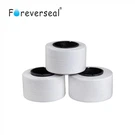


Hey there! As a supplier of HD PTFE Film, I often get asked about how this amazing material resists chemical solvents. So, I thought I'd take a deep dive into the science behind it and share my insights with you all.
First off, let's talk a bit about what HD PTFE Film is. HD stands for high density, and PTFE is short for polytetrafluoroethylene. It's a synthetic fluoropolymer of tetrafluoroethylene that has some pretty unique properties. It's super slippery, has a high melting point, and is extremely resistant to heat, electricity, and chemicals. That's why it's used in so many different applications, from PTFE Wrapping Film to PTFE Tape For Wire And Cable and Ptfe Cable Wrap Tape.
So, how does it resist chemical solvents? Well, it all comes down to its molecular structure. PTFE is made up of long chains of carbon atoms that are bonded to fluorine atoms. These carbon - fluorine bonds are incredibly strong. Fluorine is the most electronegative element, which means it has a very strong pull on the electrons in the bond. This creates a very stable and non - reactive molecule.
When a chemical solvent comes into contact with HD PTFE Film, the strong carbon - fluorine bonds prevent the solvent from breaking them apart. The solvent molecules can't penetrate the tightly packed structure of the PTFE chains. Instead, they just sort of sit on the surface of the film without causing any chemical reactions.
Another factor that contributes to its chemical resistance is the fact that PTFE is non - polar. Most chemical solvents are either polar or non - polar. Polar solvents have a positive and a negative end, like little magnets. Non - polar solvents don't have these distinct ends. Since PTFE is non - polar, it doesn't mix well with polar solvents. The polar solvent molecules are attracted to each other more than they are to the non - polar PTFE molecules. And for non - polar solvents, while they might seem like they'd mix better, the strong carbon - fluorine bonds still keep them at bay.
Let's look at some real - world examples of how this chemical resistance plays out. In the chemical processing industry, HD PTFE Film is often used as gaskets and linings in pipes and tanks that carry all sorts of harsh chemicals. Whether it's acids, bases, or organic solvents, the PTFE film can withstand the exposure without degrading. This helps to prevent leaks and corrosion, which is crucial for safety and the longevity of the equipment.
In the electronics industry, PTFE Tape For Wire And Cable and Ptfe Cable Wrap Tape are used to insulate wires. These tapes need to be able to resist any solvents or cleaning agents that might come into contact with the equipment. The chemical resistance of HD PTFE Film ensures that the insulation remains intact, protecting the wires from short - circuits and other electrical problems.
Now, it's important to note that while HD PTFE Film is highly resistant to most chemical solvents, there are some exceptions. For example, molten alkali metals like sodium and potassium can react with PTFE at high temperatures. Also, some highly reactive fluorinating agents can cause damage. But in normal, everyday industrial and commercial applications, these are rare scenarios.
One of the great things about HD PTFE Film as a material is its versatility. It can be manufactured in different thicknesses and forms to suit various needs. Whether you need a thin PTFE Wrapping Film for packaging delicate items that might be exposed to solvents or a thicker sheet for heavy - duty chemical processing applications, there's an HD PTFE Film solution for you.
If you're in the market for HD PTFE Film, you'll find that it offers long - term cost savings. Because it resists chemical solvents, it doesn't need to be replaced as often as other materials. This means less downtime for equipment maintenance and replacement, which can save you a lot of money in the long run.
In addition to its chemical resistance, HD PTFE Film also has other benefits that make it a top choice. It has a low coefficient of friction, which means it's very slippery. This can be useful in applications where you need materials to slide easily against each other. It's also resistant to UV radiation and weathering, so it can be used in outdoor applications without deteriorating.
So, if you're looking for a material that can stand up to the toughest chemical environments, HD PTFE Film is definitely worth considering. Whether you're in the chemical, electronics, or any other industry that deals with solvents, our HD PTFE Film products can provide the protection and reliability you need.


Are you interested in learning more about how our HD PTFE Film can meet your specific requirements? Or do you want to discuss a potential purchase? We'd love to hear from you and have a conversation about your needs. Get in touch with us to start the procurement process and see how our HD PTFE Film can make a difference in your operations.
References
- "The Science of Polytetrafluoroethylene" by Chemical Institute Publications
- "Industrial Applications of Fluoropolymers" by Industry Research Group